mercoledì 22 aprile 2015

NATO: Military Doctrine of Global Warfare

Global Capitalism and the Global Police State: Crisis of Humanity and the Specter of 21st Century Fascism

Welcome to the Asylum: Capitalism, a Ceaseless and Futile Quest for Money and Goods
The world capitalist system is arguably experiencing the worst crisis in its 500 year history. World capitalism has experienced a profound restructuring through globalisation over the past few decades and has been transformed in ways that make it fundamentally distinct from its earlier incarnations. Similarly, the current crisis exhibits features that set it apart from earlier crises of the system and raise the stakes for humanity.
If we are to avert disastrous outcomes we must understand both the nature of the new global capitalism and the nature of its crisis. Analysis of capitalist globalisation provides a template for probing a wide range of social, political, cultural and ideological processes in this 21st century. Following Marx, we want to focus on the internal dynamics of capitalism to understand crisis. And following the global capitalism perspective, we want to see how capitalism has qualitatively evolved in recent decades.
The system-wide crisis we face is not a repeat of earlier such episodes such as that of the the 1930s or the 1970s precisely because capital- ism is fundamentally different in the 21st century. Globalisation constitutes a qualitatively new epoch in the ongoing and open-ended evolution of world capitalism, marked by a number of qualitative shifts in the capitalist system and by novel articulations of social power. I highlight four aspects unique to this epoch.1
First is the rise of truly transnational capital and a new global production and financial system into which all nations and much of humanity has been integrated, either directly or indirectly. We have gone from a world economy, in which countries and regions were linked to each other via trade and financial flows in an integrated international market, to a global economy, in which nations are linked to each more organically through the transnationalisation of the production process, of finance, and of the circuits of capital accumulation.
No single nation-state can remain insulated from the global economy or prevent the penetration of the social, political, and cultural superstructure of global capitalism. Second is the rise of a Transnational Capitalist Class (TCC), a class group that has drawn in contingents from most countries around the world, North and South, and has attempted to position itself as a global ruling class. This TCC is the hegemonic fraction of capital on a world scale. Third is the rise of Transnational State (TNS) apparatuses. The TNS is constituted as a loose network made up of trans-, and supranational organisations together with national states. It functions to organise the conditions for transnational accumulation.
The TCC attempts to organise and institutionally exercise its class power through TNS apparatuses. Fourth are novel relations of inequality, domination and exploitation in global society, including an increasing importance of transnational social and class inequalities relative to North-South inequalities.
Cyclical, Structural, and Systemic Crises
Most commentators on the contemporary crisis refer to the “Great Recession” of 2008 and its aftermath. Yet the causal origins of global crisis are to be found in over-accumulation and also in contradictions of state power, or in what Marxists call the internal contradictions of the capitalist system. Moreover, because the system is now global, crisis in any one place tends to represent crisis for the system as a whole. The system cannot expand because the marginalisation of a significant portion of humanity from direct productive participation, the downward pressure on wages and popular consumption worldwide, and the polarisation of income, has reduced the ability of the world market to absorb world output. At the same time, given the particular configuration of social and class forces and the correlation of these forces worldwide, national states are hard-pressed to regulate trans- national circuits of accumulation and offset the explosive contradictions built into the system.
Is this crisis cyclical, structural, or systemic? Cyclical crises are recurrent to capitalism about once every 10 years and involve recessions that act as self-correcting mechanisms without any major restructuring of the system. The recessions of the early 1980s, the early 1990s, and of 2001 were cyclical crises. In contrast, the 2008 crisis signaled the slide into a structural crisis. Structural crises reflect deeper contra- dictions that can only be resolved by a major restructuring of the system. The structural crisis of the 1970s was resolved through capitalist globalisation.
Prior to that, the structural crisis of the 1930s was resolved through the creation of a new model of redistributive capitalism, and prior to that the structural crisis of the 1870s resulted in the development of corporate capitalism. A systemic crisis involves the replacement of a system by an entirely new system or by an outright collapse. A structural crisis opens up the possibility for a systemic crisis. But if it actually snowballs into a systemic crisis – in this case, if it gives way either to capitalism being superseded or to a breakdown of global civilisation – is not predetermined and depends entirely on the response of social and political forces to the crisis and on historical contingencies that are not easy to forecast. This is an historic moment of extreme uncertainty, in which collective responses from distinct social and class forces to the crisis are in great flux.
Hence my concept of global crisis is broader than financial. There are multiple and mutually constitutive dimensions – economic, social, political, cultural, ideological and ecological, not to mention the existential crisis of our consciousness, values and very being. There is a crisis of social polarisation, that is, of social reproduction. The system cannot meet the needs or assure the survival of millions of people, perhaps a majority of humanity. There are crises of state legitimacy and political authority, or of hegemony and domination. National states face spiraling crises of legitimacy as they fail to meet the social grievances of local working and popular classes experiencing downward mobility, un- employment, heightened insecurity and greater hardships.
The legitimacy of the system has increasingly been called into question by millions, perhaps even billions, of people around the world, and is facing expanded counter-hegemonic challenges. Global elites have been unable counter this erosion of the system’s authority in the face of world- wide pressures for a global moral economy. And a canopy that envelops all these dimensions is a crisis of sustain- ability rooted in an ecological holocaust that has already begun, expressed in climate change and the impending collapse of centralised agricultural systems in several regions of the world, among other indicators. By a crisis of humanity I mean a crisis that is approaching systemic proportions, threatening the ability of billions of people to survive, and raising the specter of a collapse of world civilisation and degeneration into a new “Dark Ages.”2
This crisis of humanity shares a number of aspects with earlier structural crises but there are also several features unique to the present:
1. The system is fast reaching the ecological limits of its reproduction. Global capitalism now couples human and natural history in such a way as to threaten to bring about what would be the sixth mass extinction in the known history of life on earth.3
This mass extinction would be caused not by a natural catastrophe such as a meteor impact or by evolutionary changes such as the end of an ice age but by purposive human activity. According to leading environmental scientists there are nine “planetary boundaries” crucial to maintaining an earth system environment in which humans can exist, four of which are experiencing at this time the onset of irreversible environmental degradation and three of which (climate change, the nitrogen cycle, and biodiversity loss) are at “tipping points,” meaning that these processes have already crossed their planetary boundaries.
2. The magnitude of the means of violence and social control is unprecedented, as is the concentration of the means of global communication and symbolic production and circulation in the hands of a very few powerful groups. Computerised wars, drones, bunker-buster bombs, star wars, and so forth, have changed the face of warfare. Warfare has become normalised and sanitised for those not directly at the receiving end of armed aggression. At the same time we have arrived at the panoptical surveillance society and the age of thought control by those who control global flows of communication, images and symbolic production. The world of Edward Snowden is the world of George Orwell; 1984 has arrived;
3. Capitalism is reaching apparent limits to its extensive expansion. There are no longer any new territories of significance that can be integrated into world capitalism, de-ruralisation is now well advanced, and the commodification of the countryside and of pre- and non-capitalist spaces has intensified, that is, converted in hot-house fashion into spaces of capital, so that intensive expansion is reaching depths never before seen. Capitalism must continually expand or collapse. How or where will it now expand?
4. There is the rise of a vast surplus population inhabiting a “planet of slums,”4 alienated from the productive economy, thrown into the margins, and subject to sophisticated systems of social control and to destruction – to a mortal cycle of dispossession-exploitation-exclusion. This includes prison- industrial and immigrant-detention complexes, omnipresent policing, militarised gentrification, and so on;
5. There is a disjuncture between a globalising economy and a nation-state based system of political authority. Transnational state apparatuses are incipient and have not been able to play the role of what social scientists refer to as a “hegemon,” or a leading nation-state that has enough power and authority to organise and stabilise the system. The spread of weapons of mass destruction and the unprecedented militarisation of social life and conflict across the globe makes it hard to imagine that the system can come under any stable political authority that assures its reproduction.
Global Police State
How have social and political forces worldwide responded to crisis? The crisis has resulted in a rapid political polarisation in global society. Both right and left-wing forces are ascendant. Three responses seem to be in dispute.
One is what we could call “reformism from above.” This elite reformism is aimed at stabilising the system, at saving the system from itself and from more radical responses from below. Nonetheless, in the years following the 2008 collapse of the global financial system it seems these reformers are unable (or unwilling) to prevail over the power of transnational financial capital. A second response is popular, grassroots and leftist resistance from below. As social and political conflict escalates around the world there appears to be a mounting global revolt. While such resistance appears insurgent in the wake of 2008 it is spread very unevenly across countries and regions and facing many problems and challenges.
Yet another response is that I term 21st century fascism.5
The ultra-right is an insurgent force in many countries. In broad strokes, this project seeks to fuse reactionary political power with transnational capital and to organise a mass base among historically privileged sectors of the global working class – such as white workers in the North and middle layers in the South – that are now experiencing heightened insecurity and the specter of downward mobility. It involves militarism, extreme masculinisation, homophobia, racism and racist mobilisations, including the search for scapegoats, such as immigrant workers and, in the West, Muslims. Twenty-first century fascism evokes mystifying ideologies, often involving race/culture supremacy and xenophobia, embracing an idealised and mythical past. Neo-fascist culture normalises and glamorises warfare and social violence, indeed, generates a fascination with domination that is portrayed even as heroic.
The need for dominant groups around the world to secure widespread, organised mass social control of the world’s surplus population and rebellious forces from below gives a powerful impulse to projects of 21st century fascism. Simply put, the immense structural inequalities of the global political economy cannot easily be contained through consensual mechanisms of social control. We have been witnessing transitions from social welfare to social control states around the world. We have entered a period of great upheavals, momentous changes and uncertainties. The only viable solution to the crisis of global capitalism is a massive redistribution of wealth and power downward towards the poor majority of humanity along the lines of a 21st century democratic socialism, in which humanity is no longer at war with itself and with nature.
William I. Robinson is professor of sociology, global and international studies, and Latin American studies, at the University of California-Santa Barbara. Among his many books are Promoting Polyarchy (1996), Transnational Conflicts (2003), A Theory of Global Capitalism (2004), Latin America and Global Capitalism (2008), and Global Capitalism and the Crisis of Humanity (2014). 
References
1.William I. Robinson (2004), A Theory of Global Capitalism:
Production, Class, and State in a Transnational World, Baltimore: Johns Hopkins University Press; William I. Robinson, Latin America and Global Capitalism (2008), Baltimore: Johns Hopkins University Press, see esp. chapter 1.
2. Sing C. Chew (2007), The Recurring Dark Ages: Ecological Stress, Climate Changes, and System Transformation, Landham, MD: AltaMira Press.
3. Elizabeth Kolbert (2014), The Sixth Extinction: An Unnatural History, New York: Henry Holt.
4. The phrase is from Mike Davis’ study, Planet of Slums (2007), London: Verso.
5. See in particular, William I. Robinson (2014, in press), Global Capitalism and the Crisis of Humanity, New York and Cambridge: Cambridge University Press.

How Lobbies, Intelligence Services and Advertisers Dictate Mainstream Media

How Lobbies, Intelligence Services and Advertisers Dictate Mainstream Media Content

Support independent media

newspaper_chains
Recently several journalists who worked in the mainstream media (MSM) exposed its corrupt nature, weighing in on the growing mistrust it inspires. We hope the following will inspire you to support independent media like Global Research!
Former chief political commentator of the Telegraph, Peter Oborne, resigned from the newspaper because it would not publish articles on HSBC for fear of losing advertising revenues. The bank is well-known for its money-laundering for Mexican drug cartels as well as its involvement in tax evasion schemes.
In an opinion piece called “Why I resigned from the Telegraph” he wrote:
“The coverage of HSBC in Britain’s Telegraph is a fraud on its readers. If major newspapers allow corporations to influence their content for fear of losing advertising revenue, democracy itself is in peril…From the start of 2013 onwards stories critical of HSBC were discouraged. HSBC suspended its advertising with the Telegraph… HSBC, as one former Telegraph executive told me, is “the advertiser you literally cannot afford to offend” (Peter Oborne, Why I have resigned from the Telegraph, Open Democracy, February 17, 2015)

When it comes to powerful lobbies’ influence on media content, the Zionist lobby is very well known for accusing journalists and editors of anti-Semitism and imposing its own propaganda. Even so-called progressive newspapers such as The Guardian are subject to Zionist propaganda.  David Cronin writes:
I submitted an exposé of how the pro-Israel lobby operates in Brussels. While waiting to find out if the piece would be used, I phoned Matt Seaton, who had taken over as comment editor. We had a pleasant conversation but Seaton stressed that he regarded the subject as sensitive.
I, then, modified the piece to make its tone less polemical. Still, it was not published…
Cronin decided to write about his experience when he realized that The Guardian was much less reluctant to offer platforms to Israeli politicians and their Zionist propaganda:
“Daniel Taub, Israel’s ambassador to the UK … uses a quote attributed to Golda Meir, Israel’s prime minister from 1969 to 1974, to hit back at aid agencies who accuse Israel of impeding Gaza’s reconstruction: “We will only have peace when our enemies love their children more than they hate ours.” The inference that Palestinians hate Israelis more than they love their children is a racist caricature… In February, the paper gave Yair Lapid, until recently Israel’s finance minister, a platform to describe calls for a cultural boycott of Israel as “shallow and lacking in coherence. (David Cronin How The Guardian Told Me to Steer Clear of Palestine, Electronic Intifada, 11 March 2015)
Frankfurter Allgemeine Zeitung‘s former editor Udo Ulfkotte recently published a book called “Bought Journalists. How Politicians, Secret Services and High Finance Control the Mass Media” (Gekaufte Journalisten), in which he explains how journalists manipulate the masses for powerful interests:
Saying he believes a medical condition gives him only a few years to live, and that he is filled with remorse, Dr. Udo Ulfkotte, the editor of Frankfurter Allgemeine Zeitung, one of Germany’s largest newspapers, said in an interview that he accepted news stories written and given to him by the CIA and published them under his own name. Ulfkotte said the aim of much of the deception was to drive nations toward war. (Ralph Lopez, Editor of Major German Newspaper Says He Planted Stories for the CIA, Reader Supported News, February 04, 2015)
Another book stirred some controversy lately, Au service de la République, (Serving the Republic) Roger Auque’s memoirs published posthumously. Auque, a well-known journalist who worked for major French magazines as well as the French Canadian public network Radio-Canada, admitted: “I was paid by the Israeli secret services to lead operations in Syria, using reporting as a cover.” Le Figaro, one of France’s leading magazines for which he worked, writes that “he also offered his services to the DGSE, (the French CIA) before becoming an object of interest for the CIA.”
Contrary to Ulfkotte, who’s filled with remorse, the French reporter was “not at all ashamed of this revelation”.
These few examples show once again the importance of independent media and how the corporate mainstream media is nothing but a mouthpiece for powerful interests who do not want you to be informed but rather want to manufacture consent and keep you in the dark about important issues.
To maintain our independence, Global Research does not seek financial support from private and public foundations. We have been able to develop our activities thanks to contributions from our readers. Please consider making a (one time) donation and/or becoming a Global Research Member. Any amount large or small will contribute to supporting Global Research.
To make a Donation click here!
To become a Member and get FREE BOOKS click here!

martedì 7 aprile 2015

Cultural Understanding in U.S. Army Doctrine

Secrecy News

Cultural Understanding in U.S. Army Doctrine

“Understanding culture is essential in conducting irregular warfare.”
That is the opening sentence in the introduction to a new U.S. Army publication on Cultural and Situational Understanding.
“Irregular warfare requires a deliberate application of an understanding of culture due to the need to understand a populated operational environment, what specifically is causing instability, the nature of the threat, and the ability to work with host-nation governments and security forces.”
The new Army doctrine on cultural understanding emerges from and builds upon existing Army counterinsurgency doctrine. It is “outward looking” and does not pause to contemplate the cultural foundations of the Army itself. See Cultural and Situational Understanding, Army Techniques Publication (ATP) 3-24.3, April 2015.

martedì 10 marzo 2015

US Intel Vets Oppose Brennan’s CIA Plan

US Intel Vets Oppose Brennan’s CIA Plan

The original idea of the CIA was to have independent-minded experts assessing both short- and longer-term threats to U.S. national security. Mixing with operations and politics was always a danger, which is now highlighted by CIA Director Brennan’s reorganization, opposed by a group of U.S. intelligence veterans.


MEMORANDUM FOR: The President
FROM: Veteran Intelligence Professionals for Sanity
SUBJECT: John Brennan’s Restructuring Plan for CIA

Mr. President, the CIA reorganization plan announced by Director John Brennan on Friday is a potentially deadly blow to the objective, fact-based intelligence needed to support fully informed decisions on foreign policy.  We suggest turning this danger into an opportunity to create an independent entity for CIA intelligence analysis immune from the operational demands of the “war on terror.”
On Feb. 5, 2003, immediately after Colin Powell’s address to the UN, members of VIPS sent our first VIPS memorandum, urging President George W. Bush to widen the policy debate “beyond the circle of those advisers clearly bent on a war for which we see no compelling reason and from which we believe the unintended consequences are likely to be catastrophic.”
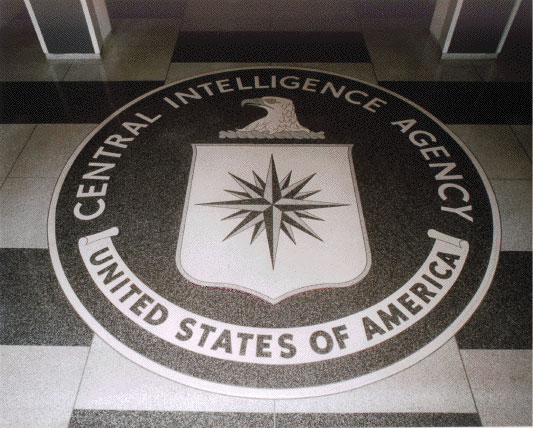
CIA seal in lobby of the spy agency's headquarters. (U.S. government photo)
CIA seal in lobby of the spy agency’s headquarters. (U.S. government photo)
The “former senior officers” whom Brennan asked for input on the restructuring plan are a similar closed, blinkered circle, as is the “outstanding group of officers from across the Agency” picked by Brennan to look at the Agency’s mission and future. He did not include any of the intelligence community dissidents and alumni who fought against the disastrous politicization of intelligence before the attack on Iraq. Nor does Brennan’s plan reflect the lessons learned from that debacle.
You have continued to express confidence in Brennan despite the CIA’s mediocre record under his leadership. We urge you to weigh Brennan’s plan against the backdrop of Harry Truman’s prophetic vision for the CIA. We need to stop wasting time and energy trying to prevent the baby Truman never wanted from being thrown out with the bathwater. Let the bathwater run off, with the baby high and dry.
An independent group for intelligence analysis would be free to produce for you and your National Security Council the medium- and long-term strategic intelligence analysis that can help our country steer clear of future strategic disasters. And we offer ourselves as advisers as to how this might be accomplished.
Our concern over what we see as the likely consequences stemming from what Brennan intends, together with our many years of experience in intelligence work, have prompted this memo, which we believe can profit from some historical perspective.
President Harry Truman wanted an agency structure able to meet a president’s need for “the most accurate … information on what’s going on everywhere in the world, and particularly of the trends and developments in all the danger spots.” In an op-ed appearing in the Washington Post exactly one month after the assassination of President John F. Kennedy, Truman added, “I have been disturbed by …  the way CIA has been diverted from its original assignment … and has become an operational and at times policy-making arm of the Government.”
Truman added that the “most important thing” was to guard against the chance of intelligence being used to influence or lead the President into unwise decisions. His warning is equally relevant now – 52 years later.

Bay of Pigs

Truman was referring to how CIA Director Allen Dulles tried to mousetrap President Kennedy into committing U.S. armed forces to finish what a rag-tag band of CIA-trained invaders of Cuba began by landing at the Bay of Pigs in April 1961, a few months before you were born. Kennedy had repeatedly warned the CIA brass and covert action planners that under no circumstances would he commit U.S. forces. But they were old hands; they knew better; they thought the young President could be had.
Allen Dulles’s handwritten notes discovered after his death show how he drew Kennedy into a plan that was virtually certain to require the support of U.S. forces. Dulles wrote that Kennedy would be compelled by “the realities of the situation” to give whatever military support was necessary “rather than permit the enterprise to fail.”
Kennedy fired Dulles, a quintessential Washington Establishment figure – something one does only at one’s own peril. As young CIA officers at the time, some of us experienced first-hand the deep reservoir of hate in which many a CIA covert action operator swam. Many could not resist venting their spleen, calling Kennedy a “coward” and even “traitor.”

Analysis Also Corrupted

You are fully aware, we trust, that our analysts’ vaunted ethos of speaking unvarnished truth to power was corrupted by Director George Tenet and Deputy Director John McLaughlin, who outdid themselves in carrying out the instructions of President Bush and Vice President Dick Cheney. The new ethos boiled down to this: If the President wants to paint Iraq as a strategic threat, it is our job to come up with the “evidence” – even if it needs to be manufactured out of whole cloth (or forged, as in “yellowcake uranium from Africa” caper).
Honest analysts were admonished not to rock the boat. A concrete example might help to show this in all its ugliness. When the only U.S. intelligence officer to interview “Curve Ball” before the war saw a draft of Powell’s Feb. 5, 2003 speech citing “first-hand descriptions” by an Iraqi defector of a fleet of mobile bioweapons laboratories, he strongly questioned the “validity of the information.” The interviewer had, from the outset, expressed deep reservations about Curveball’s reliability.
Here’s what the interviewer’s supervisor, the Deputy Chief of the CIA’s Iraqi Task Force, wrote in an email responding to his misgivings:
“Let’s keep in mind the fact that this war’s going to happen regardless of what Curve Ball said or didn’t say, and that the Powers That Be probably aren’t terribly interested in whether Curve Ball knows what he’s talking about. However, in the interest of Truth, we owe somebody a sentence or two of warning, if you honestly have reservations.”
This was not an isolated occurrence. Commenting on the results of a bipartisan Senate Intelligence Committee five-year study of pre-Iraq-war intelligence, Chairman Jay Rockefeller described it as “unsubstantiated, contradicted, or even nonexistent.” He was alluding to information (in)famously described as a “slam dunk” by then-CIA Director George Tenet who was singularly responsible for advancing the career of John Brennan.
In a departure from customary diplomatic parlance, then-Assistant Secretary of State for Intelligence Carl Ford, speaking to the authors of Hubris: The Inside Story of Spin, Scandal, and the Selling of the Iraq War, had harsh words for Tenet and his deputy John McLaughlin. Ford said that the evidence and analysis they gave policy makers was “not just wrong, they lied … they should have been shot.”
It is unfortunately true that – short of quitting and blowing the whistle – there is little one can do to prevent the skewing of “intelligence” when it is directed from the top – whether by the Bush-Tenet-McLaughlin consequential deceit on the threat from Iraq, or the ideological/careerist conceit of William Casey-Robert Gates in insisting up until the very end of the Soviet regime that the Soviet Communist Party would never relinquish power and that Soviet leader Mikhail Gorbachev was merely cleverer than his predecessors.

Thankfully, Not All Gave Up

There is hope to be drawn from those occasions where senior intelligence officials with integrity can step in, show courageous example, and – despite multiple indignities and pitfalls in the system – can force the truth to the surface. We hope that you have been made aware that, after the no-WMD-anywhere debacle on Iraq, Assistant Secretary of State for Intelligence Thomas Fingar did precisely that during 2007, supervising a watershed National Intelligence Estimate on Iran that concluded unanimously, “with high confidence,” that Iran had stopped working on a nuclear weapon in 2003.
President Bush concedes in his memoir that this put the kibosh on his and Dick Cheney’s earlier plan to attack Iran during their last year in office. So, character (as in Fingar) counts, and people of integrity can make a difference – and even help thwart plans for war – even in the most politicized of circumstances.

Restructuring

Accordingly, the primary objective in any restructuring should be to make it easier for people of integrity, like Thomas Fingar, to create an atmosphere in which analysts feel free to tell it like it is without worry about possible harm to their careers, should they come up with a politically “incorrect” conclusion – as the one on Iran clearly was.
The problem is that the Brennan restructuring effort does just the opposite. It puts the politicization on steroids. Placing intelligence analysts and operations officers together fosters a quite different kind of atmosphere – the kind that increases the likelihood of what Truman called the “most important thing” to guard against – leading “the President into unwise decisions.”
Truman saw the general problem and went even further, saying he “would like to see the CIA restored to its original assignment as the intelligence arm of the President … and its operational duties terminated or properly used elsewhere.” We think Truman was right then; and he is right now.
Decades of experience show that Truman’s fears were well founded. Indeed, from the outset, putting analysis and covert action operations together in the same agency was the first structural fault, so to speak, when it was created in 1947.
It was occasioned primarily by insistence that WWII OSS operatives who could match the KGB in what is now called “regime change” remain in government, and then a myopic choice to place them with the analysts in the newly created CIA. As Melvin Goodman points out in his The Failure of Intelligence: the Decline and Fall of the CIA, the early “CIA leadership itself was opposed to having responsibility for covert action, believing that the clandestine function would ultimately taint the intelligence product, a prescient observation.”
During the 1980s, President Reagan’s Secretary of State, George Shultz, correctly accused CIA Director William Casey and his deputy, Robert Gates, of slanting intelligence, charging that their operational involvement “colored” the Agency’s analysis. Shultz openly charged William Casey with giving President Reagan “faulty intelligence” to bolster Casey’s own policy preferences, including the ill-conceived arms-for-hostages-swap with Iran.
Shultz added that, because he had a sense of this analysis-operations toxic mix, he harbored “grave doubts about the objectivity and reliability of some of the intelligence I was getting.” Shultz was a strong advocate of separating the analysis from operations, likening the need to that of separating investment from commercial banking.

“War on Terrorism” as Business Model

The business model chosen by Brennan is fashioned to the “War on Terrorism,” and he holds up the Counterterrorism Center (CTC) as a model to emulate. There the analysts and operations officers sit side by side charged primarily with hunting, targeting, and killing in that war.
But truth, it has been pointed out, is the first casualty of war. This can be seen right off the bat in the exaggerated way the supposed “successes” of the Center are advertised. Some of us have worked in or closely with these CIA Centers, after which ten new “Mission Centers” are patterned. And we are taken aback by the hyperbolic plaudits being given them – and especially to the CTC.
That a quintessential politicizer, and big Curve Ball promoter, like former CIA Deputy Director John McLaughlin is reported to have advised Brennan on the restructuring, and lauds the benefits of “putting analysts and operators together” adds to our concern.
Very much in step, former CIA Deputy Director Michael Morell, for instance, claims that existing Centers have “proven to be a very powerful combination” and that the Counterterrorism Center is “the most successful agency component over the last decade.”
Morell remains focused on the business model of war. Just days ago he conceded that he did not think he would live to see the end of al-Qaeda: “My children’s generation and my grandchildren’s generation will still be fighting this fight,” said Morell.
Does it occur to Morell or others who have played senior intelligence roles that there ought to be a different kind of center, like what used to exist in parts of the Directorate of Intelligence, where analyst talent might be used not simply for targeting terrorists, but for figuring out what their grievances are, and whether there may be more promising ways to address them?
Do we really believe that terrorists slip out of the womb screaming “I hate America”?  And is there a cost to drone-killing them as the preferred method of eliminating terrorists (together with others who may be in the wrong place at the wrong time)?
Brennan has announced that the new Centers will “bring the full range of operational, analytic, support, technical, and digital personnel and capabilities to bear on the nation’s most pressing security issues and interests.”
We need to learn more of the specifics, but the integrated Mission Centers sound very much like fertile field for politicization and centralized control under which subordinates will feel pressure to fall in line with prosecuting the war de jour and to sign on to politically correct solutions dictated from the 7th floor under guidance from your staff in the White House.
Is this the kind of CIA we need — everyone marching in step, as major parts of the Agency are transformed into a private army at your disposal, with virtually no Congressional oversight? We don’t think so.

A Watershed

With the present restructuring plan we see little promise for the kind of agenda-free, substantive intelligence that you and other senior policy makers need. But the train seems to have left the station headed toward Brennan’s restructuring plan. The sweeping reorganization scheme is of such importance that it should be the subject of hearings in the intelligence committees of House and Senate, but there is no indication that either committee intends to do so.
Let the analysts inclined toward targeting terrorists and providing other direct operational support to war sign up for these war-on-terror and like Centers. You and your successors will still need an agency devoted to unfettered intelligence analysis able to critique honestly the likely medium- and long-term consequences of the methods used to wage the “war on terror” and other wars.

We can assure you it is far better for those analysts doing this demanding substantive work NOT to be simultaneously “part of the team” implementing that policy.

It is time to revert to what Truman envisaged for the CIA. We are ready to make ourselves available to assist you and your staff in thinking through how this might be done. That it needs to be done is clear to us, and this would seem an opportune time.
In our view, we need to stop wasting time and energy trying to prevent the baby from being thrown out with the bathwater. Let the bathwater run off. Save the baby, even if that means a separate institution in which analysts of the kind that completed that NIE on Iran in 2007 can flourish. This just might help stop a new unnecessary war, as the combat support officers try to bring an end to old ones.
In sum, we are convinced that a separate entity for intelligence analysis – the kind of agency Truman envisaged for his CIA – would be an invaluable asset to you and your successors as president.

For the Steering Group, Veteran Intelligence Professionals for Sanity (VIPS)

Fulton Armstrong, National Intelligence Officer for Latin America (ret.)
Larry Johnson, CIA analyst & State Department/counterterrorism, (ret.)
John Kiriakou, Former CIA Counterterrorism Officer
David MacMichael, USMC & National Intelligence Council (ret.)
Ray McGovern, Army Infantry/Intelligence officer & CIA presidential briefer (ret.)
Elizabeth Murray, Deputy National Intelligence Officer for the Near East, National Intelligence Council (ret.)
Torin Nelson, former HUMINT Officer, Department of the Army
Coleen Rowley, retired FBI Agent and former Minneapolis Division Legal Counsel
Peter Van Buren, former diplomat, Department of State (associate VIPS)
Kirk Wiebe, Senior Analyst, SIGINT Automation Research Center, NSA (ret.)
Lawrence Wilkerson, Colonel (USA, ret.), Distinguished Visiting Professor, College of William and Mary
Ann Wright, retired U.S. Army reserve colonel and former US diplomat (resigned in March 2003 in opposition to the Iraq War

giovedì 26 febbraio 2015

The CIA Created the Label "Conspiracy Theorists"

In 1967, the CIA Created the Label "Conspiracy Theorists" ... to Attack Anyone Who Challenges the "Official" Narrative

George Washington's picture

http://www.zerohedge.com/news/2015-02-23/1967-he-cia-created-phrase-conspiracy-theorists-and-ways-attack-anyone-who-challenge

Conspiracy Theorists USED TO Be Accepted As Normal

Democracy and free market capitalism were founded on conspiracy theories.
The Magna Carta, the Constitution and Declaration of Independence and other  founding Western documents were based on conspiracy theories. Greek democracy and free market capitalism were also based on conspiracy theories.
But those were the bad old days …Things have now changed.

The CIA Coined the Term Conspiracy Theorist In 1967

That all changed in the 1960s.
Specifically, in April 1967, the CIA wrote a dispatch which coined the term “conspiracy theories” … and recommended methods for discrediting such theories.  The dispatch was marked “psych” –  short for “psychological operations” or disinformation –  and “CS” for the CIA’s “Clandestine Services” unit.
The dispatch was produced in responses to a Freedom of Information Act request by the New York Times in 1976.
The dispatch states:
2. This trend of opinion is a matter of concern to the U.S. government, including our organization.

***

The aim of this dispatch is to provide material countering and discrediting the claims of the conspiracy theorists, so as to inhibit the circulation of such claims in other countries. Background information is supplied in a classified section and in a number of unclassified attachments.

3. Action. We do not recommend that discussion of the [conspiracy] question be initiated where it is not already taking place. Where discussion is active addresses are requested:

a. To discuss the publicity problem with and friendly elite contacts (especially politicians and editors) , pointing out that the [official investigation of the relevant event] made as thorough an investigation as humanly possible, that the charges of the critics are without serious foundation, and that further speculative discussion only plays into the hands of the opposition. Point out also that parts of the conspiracy talk appear to be deliberately generated by …  propagandists. Urge them to use their influence to discourage unfounded and irresponsible speculation.

b. To employ propaganda assets to and refute the attacks of the critics. Book reviews and feature articles are particularly appropriate for this purpose. The unclassified attachments to this guidance should provide useful background material for passing to assets. Our ploy should point out, as applicable, that the critics are (I) wedded to theories adopted before the evidence was in, (II) politically interested, (III) financially interested, (IV) hasty and inaccurate in their research, or (V) infatuated with their own theories.

***

4. In private to media discussions not directed at any particular writer, or in attacking publications which may be yet forthcoming, the following arguments should be useful:

a. No significant new evidence has emerged which the Commission did not consider.

***

b. Critics usually overvalue particular items and ignore others. They tend to place more emphasis on the recollections of individual witnesses (which are less reliable and more divergent–and hence offer more hand-holds for criticism) …

***

c. Conspiracy on the large scale often suggested would be impossible to conceal in the United States, esp. since informants could expect to receive large royalties, etc.

***

d. Critics have often been enticed by a form of intellectual pride: they light on some theory and fall in love with it; they also scoff at the Commission because it did not always answer every question with a flat decision one way or the other.

***

f. As to charges that the Commission’s report was a rush job, it emerged three months after the deadline originally set. But to the degree that the Commission tried to speed up its reporting, this was largely due to the pressure of irresponsible speculation already appearing, in some cases coming from the same critics who, refusing to admit their errors, are now putting out new criticisms.

g. Such vague accusations as that “more than ten people have died mysteriously” can always be explained in some natural way ….

5. Where possible, counter speculation by encouraging reference to the Commission’s Report itself. Open-minded foreign readers should still be impressed by the care, thoroughness, objectivity and speed with which the Commission worked. Reviewers of other books might be encouraged to add to their account the idea that, checking back with the report itself, they found it far superior to the work of its critics.
Here are screenshots of part of the memo:
CIA conspiracy 

 CIA conspiracy2
Summarizing the tactics which the CIA dispatch recommended:
  • Claim that it would be impossible for so many people would keep quiet about such a big conspiracy
  • Claim that eyewitness testimony is unreliable
  • Claim that this is all old news, as “no significant new evidence has emerged”
  • Ignore conspiracy claims unless discussion about them is already too active
  • Claim that it’s irresponsible to speculate
  • Accuse theorists of being wedded to and infatuated with their theories
  • Accuse theorists of being politically motivated
  • Accuse theorists of having financial interests in promoting conspiracy theories
In other words, the CIA’s clandestine services unit created the arguments for attacking conspiracy theories as unreliable in the 1960s as part of its psychological warfare operations.

But Aren’t Conspiracy Theories – In Fact – Nuts?

Forget Western history and CIA dispatches … aren’t conspiracy theorists nutty?
In fact, conspiracies are so common that judges are trained to look at conspiracy allegations as just another legal claim to be disproven or proven based on the specific evidence:
Federal and all 50 state’s codes include specific statutes addressing conspiracy, and providing the punishment for people who commit conspiracies.

But let’s examine what the people trained to weigh evidence and reach conclusions think about “conspiracies”. Let’s look at what American judges think.

Searching Westlaw, one of the 2 primary legal research networks which attorneys and judges use to research the law, I searched for court decisions including the word “Conspiracy”. This is such a common term in lawsuits that it overwhelmed Westlaw.

Specifically, I got the following message:
“Your query has been intercepted because it may retrieve a large number of documents.”
From experience, I know that this means that there were potentially millions or many hundreds of thousands of cases which use the term. There were so many cases, that Westlaw could not even start processing the request.

So I searched again, using the phrase “Guilty of Conspiracy”. I hoped that this would not only narrow my search sufficiently that Westlaw could handle it, but would give me cases where the judge actually found the defendant guilty of a conspiracy. This pulled up exactly 10,000 cases — which is the maximum number of results which Westlaw can give at one time. In other words, there were more than 10,000 cases using the phrase “Guilty of Conspiracy” (maybe there’s a way to change my settings to get more than 10,000 results, but I haven’t found it yet).

Moreover, as any attorney can confirm, usually only appeal court decisions are published in the Westlaw database. In other words, trial court decisions are rarely published; the only decisions normally published are those of the courts which hear appeals of the trial. Because only a very small fraction of the cases which go to trial are appealed, this logically means that the number of guilty verdicts in conspiracy cases at trial must be much, much larger than 10,000.

Moreover, “Guilty of Conspiracy” is only one of many possible search phrases to use to find cases where the defendant was found guilty of a lawsuit for conspiracy. Searching on Google, I got 3,170,000 results (as of yesterday) under the term “Guilty of Conspiracy”, 669,000 results for the search term “Convictions for Conspiracy”, and 743,000 results for “Convicted for Conspiracy”.

Of course, many types of conspiracies are called other things altogether. For example, a long-accepted legal doctrine makes it illegal for two or more companies to conspire to fix prices, which is called “Price Fixing” (1,180,000 results).

Given the above, I would extrapolate that there have been hundreds of thousands of convictions for criminal or civil conspiracy in the United States.

Finally, many crimes go unreported or unsolved, and the perpetrators are never caught. Therefore, the actual number of conspiracies committed in the U.S. must be even higher.

In other words, conspiracies are committed all the time in the U.S., and many of the conspirators are caught and found guilty by American courts. Remember, Bernie Madoff’s Ponzi scheme was a conspiracy theory.

Indeed, conspiracy is a very well-recognized crime in American law, taught to every first-year law school student as part of their basic curriculum. Telling a judge that someone has a “conspiracy theory” would be like telling him that someone is claiming that he trespassed on their property, or committed assault, or stole his car. It is a fundamental legal concept.

Obviously, many conspiracy allegations are false (if you see a judge at a dinner party, ask him to tell you some of the crazy conspiracy allegations which were made in his court). Obviously, people will either win or lose in court depending on whether or not they can prove their claim with the available evidence. But not all allegations of trespass, assault, or theft are true, either.

Proving a claim of conspiracy is no different from proving any other legal claim, and the mere label “conspiracy” is taken no less seriously by judges.
It’s not only Madoff. The heads of Enron were found guilty of conspiracy, as was the head of Adelphia. Numerous lower-level government officials have been found guilty of conspiracy. See this, this, this, this and this.
Time Magazine’s financial columnist Justin Fox writes:
Some financial market conspiracies are real …

Most good investigative reporters are conspiracy theorists, by the way.
And what about the NSA and the tech companies that have cooperated with them?

But Our Leaders Wouldn’t Do That

While people might admit that corporate executives and low-level government officials might have engaged in conspiracies – they may be strongly opposed to considering that the wealthiest or most powerful might possibly have done so.
But powerful insiders have long admitted to conspiracies. For example, Obama’s Administrator of the Office of Information and Regulatory Affairs, Cass Sunstein, wrote:
Of course some conspiracy theories, under our definition, have turned out to be true. The Watergate hotel room used by Democratic National Committee was, in fact, bugged by Republican officials, operating at the behest of the White House. In the 1950s, the Central Intelligence Agency did, in fact, administer LSD and related drugs under Project MKULTRA, in an effort to investigate the possibility of “mind control.” Operation Northwoods, a rumored plan by the Department of Defense to simulate acts of terrorism and to blame them on Cuba, really was proposed by high-level officials ….

But Someone Would Have Spilled the Beans

A common defense to people trying sidetrack investigations into potential conspiracies is to say that “someone would have spilled the beans” if there were really a conspiracy.
But famed whistleblower Daniel Ellsberg explains:
It is a commonplace that “you can’t keep secrets in Washington” or “in a democracy, no matter how sensitive the secret, you’re likely to read it the next day in the New York Times.” These truisms are flatly false. They are in fact cover stories, ways of flattering and misleading journalists and their readers, part of the process of keeping secrets well. Of course eventually many secrets do get out that wouldn’t in a fully totalitarian society. But the fact is that the overwhelming majority of secrets do not leak to the American public. This is true even when the information withheld is well known to an enemy and when it is clearly essential to the functioning of the congressional war power and to any democratic control of foreign policy. The reality unknown to the public and to most members of Congress and the press is that secrets that would be of the greatest import to many of them can be kept from them reliably for decades by the executive branch, even though they are known to thousands of insiders.
History proves Ellsberg right. For example:
  • A BBC documentary shows that:
There was “a planned coup in the USA in 1933 by a group of right-wing American businessmen . . . . The coup was aimed at toppling President Franklin D Roosevelt with the help of half-a-million war veterans. The plotters, who were alleged to involve some of the most famous families in America, (owners of Heinz, Birds Eye, Goodtea, Maxwell Hse & George Bush’s Grandfather, Prescott) believed that their country should adopt the policies of Hitler and Mussolini to beat the great depression”
Moreover, “the tycoons told General Butler the American people would accept the new government because they controlled all the newspapers.” Have you ever heard of this conspiracy before? It was certainly a very large one. And if the conspirators controlled the newspapers then, how much worse is it today with media consolidation?
  • The government’s spying on Americans began before 9/11 (confirmed here and here. And see this.) But the public didn’t learn about it until many years later. Indeed, the the New York Times delayed the story so that it would not affect the outcome of the 2004 presidential election
  • The decision to launch the Iraq war was made before 9/11. Indeed, former CIA director George Tenet said that the White House wanted to invade Iraq long before 9/11, and inserted “crap” in its justifications for invading Iraq. Former Treasury Secretary Paul O’Neill – who sat on the National Security Council – also says that Bush planned the Iraq war before 9/11. And top British officials say that the U.S. discussed Iraq regime change one month after Bush took office. Dick Cheney apparently even made Iraqi’s oil fields a national security priority before 9/11. And it has now been shown that a handful of people were responsible for willfully ignoring the evidence that Iraq lacked weapons of mass destruction. These facts have only been publicly disclosed recently. Indeed, Tom Brokaw said, “All wars are based on propaganda.” A concerted effort to produce propaganda is a conspiracy
Moreover, high-level government officials and insiders have admitted to dramatic conspiracies after the fact, including:
The admissions did not occur until many decades after the events.
These examples show that it is possible to keep conspiracies secret for a long time, without anyone “spilling the beans”.
In addition, to anyone who knows how covert military operations work, it is obvious that segmentation on a “need-to-know basis”, along with deference to command hierarchy, means that a couple of top dogs can call the shots and most people helping won’t even know the big picture at the time they are participating.
Moreover, those who think that co-conspirators will brag about their deeds forget that people in the military or intelligence or who have huge sums of money on the line can be very disciplined. They are not likely to go to the bar and spill the beans like a down-on-their-luck, second-rate alcoholic robber might do.
Finally, people who carry out covert operations may do so for ideological reasons — believing that the “ends justify the means”. Never underestimate the conviction of an ideologue.

Conclusion

The bottom line is that some conspiracy claims are nutty and some are true. Each has to be judged on its own facts.
Humans have a tendency to try to explain random events through seeing patterns … that’s how our brains our wired. Therefore, we have to test our theories of connection and causality against the cold, hard facts.
On the other hand, the old saying by Lord Acton is true:
Power tends to corrupt, and absolute power tends to corrupt absolutely.
Those who operate without checks and balances – and without the disinfectant sunlight of public scrutiny and accountability – tend to act in their own best interests … and the little guy gets hurt.
The early Greeks knew it, as did those who forced the king to sign the Magna Carta, the Founding Fathers and the father of modern economics. We should remember this important tradition of Western civilization.
Postscript: The ridicule of all conspiracy theories is really just an attempt to diffuse criticism of the powerful.
The wealthy are not worse than other people … but they are not necessarily better either. Powerful leaders may not be bad people … or they could be sociopaths.
We must judge each by his or her actions, and not by preconceived stereotypes that they are all saints acting in our best interest or all scheming criminals.
And see ...

The Troll’s Guide to Internet Disruption

venerdì 20 febbraio 2015

PERES AND THE YEMENITES OF LONG MEMORIES

www.barrychamish.com

                              
                                    PERES AND THE YEMENITES OF LONG MEMORIES
                                                                                      by Barry Chamish


         Just before the February visit of former Israeli President Shimon Peres to the US, the Yemenites revitalized his crimes against them. Please read the latest posts well, posted in consecutive years leading
to this year:                                                                                  

http://eng.haokets.org/2015/01/24/yemenite-children-affair-families-of-the-kidnapped-speak-out/

http://eng.haokets.org/2014/01/25/the-tragedy-of-the-lost-yemenite-children-in-the-footsteps-of-the-adoptees/

http://eng.haokets.org/2013/07/11/what-if-this-child-wasnt-named-yihye/#comments

          I had more than a passing interest in the issue:

           In 1995, my revelations about the Rabin murder had made headlines in Israel and the leaders of the Yemenite Children's movement asked me to investigate their cause. Their movement's leader, Rabbi Uzi Meshulum was arrested and they feared for his life.
           Who could blame them? Meshulum's arrest had already caused one murder. To get the rabbi into prison, the Israeli authorities surrounded his home and placed him and several dozen of his congregants under siege. Nearly 2000 police and Shabak officers arrived at his home in Yehud and they were backed up by helicopters and dogs. But it was the snipers who were assigned to wipe out the rabbi, his family and his congregation.
            One unarmed congregant, Shlomi Asoulin was shot by a sniper. He was taken to police lines where he was allowed to bleed to death. Then Rabbi Meshulum's house was shot up. I counted fifty bullet holes in his living room walls and then stopped. I got the message. The state tried to mass-execute him, his wife, children and young followers.
            In 1996, Rabbi Meshulum asked to meet me. I traveled with his wife to Sharon Prison, walked through a maze of sinking corridors until I reached his compound. We shook hands, and he had a powerful grip. We spoke of many things but I wanted to know the big truth from the source: why hadn't he united the kidnapped children with their biological parents? He then blasted the music on his portable tape machine and explained that he didn't have the heart to tell the parents that the majority of their children were dead, murdered in atomic experiments, most shipped first to America in cages. Then he revealed the reason for his repression: the founder of the Israeli atomic research program was Shimon Peres and if the truth came out, he would be exposed for his role in the atrocities.
            He told me why he wanted this meeting. The Shifris family had assumed control of his movement and he was now certain that they were Shabak infiltrators destroying his movement from within. He wanted me to take over as spokesman.
            I accepted, but Ora Shifris would have nothing to do with it. The Yemenite people are innately modest and mild-mannered. I had my advocates but none could find the wherewithal to stand up to the feisty Ashkenazi lady who had shanghaied their fight for justice.
    

           Before he arrived, I was asked by the American Jewish Right to help protest Peres on my radio show and, if possible, in person. The Rightists responded with disinformation, shoddy research, and amateurism that fell right into the hands of anyone who called them extremists. Like chickens in a barrel, they lived up to their reputation. They were, in fact, infiltrated, controlled extremists.
           But then, who can you trust? The ignorant low-lifes who use any excuse to vilify Jews and Israel? The Jews who keep their traps shut to "protect security.?" Or how about the Christians who have
created a myth of their "prophetic" Holy Land nation?
           I want blot them all out of my mind, and relate only to my Jewish victims. We could care less about myth-making Christians, dummy anti-semites, and mute Jews. We want justice and we insist that the monster Peres be indicted for his crime against the Yemenites.
           Like that can happen. It would require everyone facing truth. Here's my previous coverage of Peres and one unfortunate Yemenite, Ofra Haza:                                               

                             
                                 THE MURDER OF OFRA HAZA
                                          by Barry Chamish

 The missing Yemenite children claimed another victim. Before we begin, please open:

                      http://chipwich.tripod.com/ofrahaza/videos/Tzedek.html
Journalist (Ofra Haza) decides to investigate the "kidnapped Yemen children" case & even to find her twin brother after he was missing after his birth. She is meeting Gidi Vaxman (Arnon Tzadok), a detective in the homicide department who is in the climax of solving a very complicated murder case. With her determination, she succeeds in breaking his stubbornness to prove to him that he is her lost brother & to lead him to meeting with his biological parents & meeting his past.

      Now we begin with some deep political background. Under dire threat, Ariel Sharon has begun the process of the forced removal of 8000 Jews from their homes. The pressure from within the country comes from the top of Labor Zionism. Their goal is to stop the religious revival taking place within Yesha, beginning with Gaza. With the transfer of the Gazan Jews will come a split in the country so profound that over half its citizens will stop accepting the government as their legal authority. This will spell the end of Israel.
      The Gazan Jews represent the finest ideals of the Zionism of national liberation. Labor Zionism is a foreign transplant on the body of the Jews and only its removal can spell the salvation of Israel.
      In my previous two articles I spelled out the depths of criminality which is Labor Zionism. With ample proof we learned that the Ben Gurion government sanctioned the mass irradiation of Sephardic children and youths in the 1950s, while kidnapping some 4500 Yemenite infants for use as guinea pigs in American atomic experiments. For this, Israel was paid today's equivalent of 50 billion dollars.
      The expose of the Yemenite kidnappings led readers to insist I explore the murder of the Yemenite-Israeli singer Ofra Haza. I had just begun when, divinely, a member of Haza's family asked to meet with me. What he imparted is going to sound fantastic, but what doesn't anymore? You judge, but I believed him.
       Let's start with the motive. Ofra Haza had a cousin kidnapped from a transit camp in the 1950s. In 1985, she released an album of Yemenite Songs which turned her into an international disco star, in fact, the most popular Israeli entertainer ever. She was a hero to the Israeli Yemenite community.
       In the early 1990s, Rabbi Uzi Meshulum, leader of the movement on behalf of the missing Yemenite children, ignited a demand for the truth that was spreading throughout the country. His house was surrounded by police and army, shot up, killing an eighteen year old follower, and he was finally imprisoned. He returned home in 1999 lobotomized.
       The Yemenite community was enraged but felt powerless. Ofra Haza had power, lots of it within the country and throughout the world. Look at a typical testimony to her influence pulled off the internet:

I have to admit that I was ignorant to the proud history
of my own ancestors ( OFRA and I are Yemenite ).
After being exposed to OFRA's music I found myself researching
my ethnic history, asking my mother and grand mother to tell
me all they knew of the Yemenite people.

         In 1997, Ofra Haza decided to dedicate herself to the missing Yemenite children. She financed and starred in a movie about the issue:

Liat Collins
Jerusalem Post
02-28-1997
"Who kidnapped Ofra Haza?" Under this intriguing title, Ma'ariv writer Michal Kafra interviewed the superstar singer who is starring in an Israeli film examining the disappearances of Yemenite immigrant children in the early years of the state. For Haza it marks a return to the big screen, a return from recording studios in Germany and, above all, a return to her roots.

The film, called Absolute Justice, is directed by Doron Eran and Arnon Zadok, who is also the producer.

          
Arnon Zadok is no minor director. Yemenite himself, he has directed award winning films like White Night, and Beyond The Walls. In fact, he was the last Israeli director to be nominated for an Oscar. But Absolute Justice was shown once at the Tel Aviv Cinemateque and disappeared.

I was heartbroken when she died. I was never sure that a woman this beautiful would be content to be solely a recording artist; I thought that she had been aspiring to a career in film. I believed that her disappearance from the scene was a result of her film career not taking off;
-Tom Schnabel
Producer, KCRW Radio

           Any movie starring Ofra Haza would have been a hit in Israel but never more than after her death, they told us, of AIDS. So where did the movie go?
           It was also in 1997, while making her movie, that Ofra Haza was pursued by a suitor named Doron Ashkenazi. Not just pursued, hounded. She wanted nothing to do with him but profound family pressure was put on her to give him a chance. After her death, it was revealed that Ashkenazi, supposedly a building contractor, paid off Ofra's cousin to be his matchmaker. When her persuasion led to his marriage to Ofra, the yente was paid off with a $20,000 kitchen.
           In the wake of Haza's unexpected death, both Ha'ir and Haaretz published pretty deep exposes of Haza's life with Ashkenazi. With the cooperation of her family and her longtime agent, both articles agreed on most major points. Of Ashkenazi, we learned that:

          Though she wanted to live near her family in Yehud, Ashkenazi forced Haza to move to an expensive home in Herzlia. Once separated from her roots, he forbade her from visiting family and friends, and had her fire her longtime manager/producer, Bezalel Aloni. While she was dying, Ashkenazi had her sign the deed to her Yehud home over to him, and on the day of her death, he emptied her bank account. Ofra had informed her family that in her will, she bequeathed her home and worldly domain to them. The family challenged Ashkenazi's claim to her property in court. Note that the lawyer chosen was Rami Tsuberi, author of a stinging book about the kidnapped Yemenite children. This URL is in Hebrew.

             http://www.bambili.com/bambili_news/katava_main.asp?news_id=1007&sivug_id=6

            Ofra Haza was a traditional Yemenite woman, who was modest by nature and not by any means promiscuous. Yet, Ashkenazi convinced her to abort their baby. URL also in Hebrew:

              http://www.bambili.com/bambili_news/katava_main.asp?news_id=990&sivug_id=6

              Because of her known modesty, combined with the abortion, the public accused Ashkenazi of passing the AIDS virus on to her. He denied it and promised to take an AIDS test and reveal the results to the public. This was apparently threatening to someone. He never had a chance to take the test...

Itim
Jerusalem Post
04-09-2001
Headline: Ofra Haza's widower dies, drugs found
Byline: Itim
Edition; Daily
Section: News
Page: 01

Monday, April 9, 2001 -- The attorney of the family of singer Ofra Haza, who died last February of AIDS, said yesterday the family awaits the results of the autopsy to be performed on her husband, Doron Ashkenazi, who died Saturday night, to determine whether he was an HIV carrier.

Ashkenazi was found unconscious Saturday night in his Herzliya home, evidently by friends, who called Magen David Adom around 9 p.m.      

       ...because he was snuffed out 14 months after Haza. But look who promised to do the HIV test post mortem? Why it's Yehuda Hiss, the coroner who falsified the autopsy of Yitzhak Rabin, and the coroner who was caught counterfeiting a DNA test between a surviving Yemenite child and her biological mother.
        In English, how Ashkenazi died:

http://chipwich.tripod.com/ofrahaza/doran.html

By Amit Ben-Aroya
Ha'aretz Correspondent and wires
Doron Ashkenazi - widower of Israel's most successful international singer, Ofra Haza, who died of AIDS in February 2000 - died Saturday night of an overdose of crystallized cocaine, police said.
His autopsy today may shed a light on Haza's death as well.
"We are expecting an answer as to whether Doron was HIV positive, and the one who infected Ofra," attorney Arie Sharabi, who represents the Haza family, said yesterday.
Several complaints were filed with the police, accusing Ashkenazi of not informing Haza that he was HIV positive. Ashkenazi, who has an eight-year-old girl and a 15-year-old boy, was never arrested in connection with Haza's death. The Tel Aviv prosecutor is still working on the Haza file. His death is to terminate the investigation, unless the family allows it to be continued, which is very unlikely, Sharabi explained.
On Saturday night, the night of the Seder, Ashkenazi would not celebrate with his family. He said he was still in mourning. A preliminary police investigation indicates he spent the evening with friends, doing "crystal meth" at Ashkenazi's home in Herzliya.
When Ashkenazi suddenly collapsed at 8 P.M., one of the friends called an ambulance, and told Ashkenazi's family. Ashkenazi was rushed to Beilinson Hospital in Petah Tikva, where, after attempts at resuscitation, he was pronounced dead.
Police were only informed at 10:30 PM. Chief Superintendent Avi Sasson, deputy commander of the Gelilot station, which is investigating the case, told Ha'aretz he still did not know why Ashkenazi's car was found parked in south Tel Aviv.
Ashkenazi family lawyer Shmuel Zang said Ashkenazi was focused on the legal proceeding that were to begin in a few weeks regarding the validity of Haza's will, a copy of which could not be found.
The medical panel that investigated Haza's death published its findings three months ago. Its report said that, if Haza had admitted herself to hospital earlier, her life might have been saved. But Haza, fearful that her condition would become public knowledge, refused to go to the hospital, even when her situation had become very serious.
Ashkenazi was first exposed to the public eye when, in July 1997, he married Haza, a popular singer. She was discovered at age 12 at the underprivileged Hatikva neighborhood in Tel Aviv, by Bezalel Aloni, who was her personal manager for years - until her marriage to Ashkenazi, when she severed her ties with him.
Just weeks before her death, she telephoned Aloni and told him of her condition. "I said a year ago that this man [Ashkenazi] was to blame. He covered himself with a battery of lawyers. His death only serves to emphasize how tragic and futile Ofra's death was. Doron was the first and last man in her life, and that's terrible," Aloni said.
© copyright 2001 Ha'aretz. All Rights Reserved

      With Ashkenazi out of the way, he would talk no more, nor take an HIV test. Dr. Hiss' post mortem test was never released, so Haaretz was used to put final closure on the issue, publishing a report that Haza had an affair with a bi-sexual German film producer. The disinformation apparently did its job and the Haza death withered away with the elimination of Ashkenazi.
       Now, with great trepidation, I introduce Shimon Peres. It was Peres who invited Haza to sing at the signing of the Oslo Accord and at the Nobel Prize ceremony, during which he won a prize for "peace." Recalling that Peres was in charge of the Israeli atomic program during the days when the Yemenite children were kidnapped and turned into guinea pigs for atomic experiments, her appearance beside him was more than a little disconcerting.
      When Haza entered the hospital, 13 days before she finally succumbed to her poisoning, Peres called her mother to see how she was doing.
         http://www.jpost.com/Editions/2000/02/25/News/News.3176.html

         And who gave her eulogy, but Shimon Peres?:

http://www3.haaretz.co.il/eng/htmls/kat6_3.htm

At the funeral, Peres called Haza "a singer of hope for the nation and the world" and thanked her for "making Israel a nation of song."

        What was Peres' great interest in promoting the career of Ofra Haza? I met the Haza family member at a cafe near the Shalom Tower in Tel Aviv. Everything he told me came from within Ofra Haza's closest circles.

FM - She was murdered because of the film. I was there when it was shown at the Cinemateque. It was chopped up. She told us that she named names in the movie. I recall she blamed Yisrael Kessar and Yisrael Yeshiahu for being the capos of the kidnappings. That wasn't in the final edit of the film. The film was never shown again but copies of the original are floating around. They got Arnon to bury it and they got Ofra buried.

BC - How did they do it?

FM - We all believe she was deliberately infected with AIDS. Now there was no reason for her to die of it. She was feeling weak for a year and had seen her doctor to complain. But she wasn't given the HIV cocktail.

BC - Why not?

FM - We found out later that her doctor, Mimi Hatman, was a friend/lover of Doron Ashkenazi's.
They were in on the murder together. Do you remember the nonsense the media spread that Ofra kept her AIDS a secret so her fans wouldn't be disappointed? In other words, she preferred to die rather than treat her disease? What a story, but the public bought it. The twist given was that she died of shame.

BC - So Ashkenazi married her to murder her?

FM - Yeah. He was the hitman.

BC - For who, Shabak, Mossad?

FM - No, he was Peres' boy. He was on assignment from him. Peres was about the last survivor of the gang that arranged the kidnappings. He would do anything to keep the lid on the affair. When he found out that Ofra was on the Yemenite children bandwagon, he panicked. She was bigger than he was. She was more popular and, of course, way more trusted. She was the biggest threat the scandal ever faced. She was too naive to realize the danger she placed herself in by making that movie. After they got Ofra out of the way, they decided to finish the job. Ashkenazi was getting unpredictable after everyone thought he gave her AIDS because he had it. He didn't and hated everyone thinking he did. He was going to blow the operation so they had him ODing on a needle. That was perfect because it explained how this heterosexual got the disease in the first place. A couple in their 30s injected him and the woman was murdered too. It's very deadly to get too close to Peres, and Ofra should have known better. She knew him better than anyone ever found out.

BC - Because of Oslo and the Nobel Prize ceremony?

FM - He took her everywhere. If Margaret Thatcher was in town, he'd bring her along to serenade her. I have a picture of that event. His affair with her began way before the 'peace' process. He saw her firstrole as Ha Frekha, (The Tart), and he took a shine to her.That's how he decided to meet Ofra. Peres is a serial cad, but at least he rewards his conquests with great careers. However, he really took advantage of her.

BC - Are you really saying that Peres had an affair with Ofra Haza?

FM - Oh, for years. There are people in the family who say he raped her, but I call it mind-screwing. She's a young naive singer who comes from the slums. Now she's invited to Stockholm to perform for famous diplomats. How could she refuse him later in the hotel? He was using her to satisfy himself and sell peace. He had it made. And she was getting a big career boost by playing along. But she made a bigger mistake.

BC - Being what?

FM - She wanted to do something for her people. The issue of the Yemenite children took hold. I'm almost positive it had nothing to do with getting even with Peres. I don't think she made the connection to his role. But there is that chance that she wanted revenge for the shame he caused her, at least subconsciously. Whatever the truth, Peres felt betrayed and threatened. So Ofra got the Rabin treatment.

      That was NOT what I was expecting to hear when I arranged the interview.
      If any of this tawdry tale is true, and I'm inclined to believe that ALL of it may be, then we know just how much wickedness resides in the heart of the leader of the Labor Party, of Labor Zionism, and of  the peacemaker who brought us the Oslo nightmare which led to ISIS at our doorsteps in Gaza and the Sinai.

end

Dear readers, I need you more than ever to keep my work going. Don't put off your contribution:

My book Who Murdered Yitzhak Rabin? http://www.lulu.com/content/640899

It will lead you to all my other books.

My Rabin DVD online in Hebrew:

https://www.youtube.com/watch?v=wOYpkCP1WNM

In English:

https://www.youtube.com/watch?v=1IAsNUijHdw 

**

 Hear my radio show:    
http://www.libertyarchives.com /

I have a series of DVDs and CDs that I normally sell for
a set price.
You can have any one for just $10 in the US,
signed and dedicated to you personally. Or take all 8
for just $50. Outside the US, add $3.
each or $60. for all of them.But please write me at chamishba@gmail.com or chamish@netvision.net.il to order.

DVDs:

Who Murdered Yitzhak Rabin; The Vatican's Crusade Against
Jerusalem; Shabtai Tzvi, Labor Zionism And The Holocaust;
The Dirty War Against The Settlers; Take Back Israel;
Return Of The Giants; Vatican Update;
120 Radio Shows; Stopping The Next Holocaust; Interview for Italian TV:
And in Hebrew, Who Murdered Rabin + Save Israel

Essential contributions, if you want me to continue, at Paypal:  chamishba@gmail.com
or by writing:
Barry Chamish
POB 840157
Saint Augustine, FL  32080
Sharon murder. Me explaining in Hebrew:

https://www.youtube.com/watch?v=KP8gLbJ1RQE

La Forza mentale e l'arte di decifrare il comportamento umano

  In questo video, l'ex agente dei Servizi Segreti Evy Poumpouras discute le componenti essenziali della forza mentale e della comunicaz...