domenica 5 gennaio 2020

Big Four auditing firms and Deep State: the unholy alliance

The following is an extract from Bean Counters: The Triumph of the Accountants and How They Broke Capitalism, available on Amazon (and on LibGen):
https://www.amazon.it/Bean-Counters-Triumph-Accountants-Capitalism/dp/1786490315


DISASTER MANAGEMENT

In 2008, after a five-year delay, the jet-refuelling scheme on which KPMG’s many-hatted Dr Stone had advised eventually went ahead. It soon became clear that the 27-year Future Strategic Tanker Aircraft contract had lumbered the armed forces with overpriced planes that weren’t even fit for ‘high-threat areas’: something of a drawback in military aircraft. The fiasco prompted one of the National Audit Office’s most damning reports on a major public contract, complete with the ‘not value for money’ black spot. The deal, said the watchdog, had been struck ‘without a sound evaluation of alternative procurement routes to justify why the PFI route offered the best value for money’. 14

Since KPMG’s top PFI man had been in charge, this wasn’t too surprising. In 2010, the outcome was summed up by the chairman of Parliament’s public accounts committee at the time, Sir Edward Leigh. ‘By introducing a private finance element to the deal,’ he concluded, ‘the MoD managed to turn what should have been a relatively straightforward procurement into a bureaucratic nightmare.’ 15

Still, a ‘bureaucratic nightmare’ is a consultant’s dream, and with the taxpayer handing over £10m for ‘finance, tax and accounting advice’, once again the bean counters led by Dr Stone came out on top. Nor did the affair harm the head of the MoD’s PFI unit who had signed off the deal, Nick Prior. By the time the extent of the waste was exposed, he had stepped through the well-oiled revolving door between Whitehall and the PFI industry to be Deloitte’s ‘global head of infrastructure’.
There he rejoices in the role of ‘lead client service partner’ for the Ministry of Defence. 16

Even with PFI and the big accountancy firms’ role in it largely discredited, the scheme remains another gift from the taxpayer that keeps on giving to the bean counters. When hospital trusts saddled with overpriced PFI contracts inevitably ran into trouble after a few years, the Big Four would be back on the scene selling remedies for the ill-effects of their own snake oil. By 2013, the biggest health PFI scheme, a £1.1bn redevelopment at St Bartholomew and Royal London, was eating up £120m a year of the trust’s budget, plunging it into a deficit of around £50m and forcing thousands of job cuts. In came PwC as ‘turnaround’ specialists, even though the same firm had advised the trust on signing the PFI deal in the first place seven years earlier. Back then, even the trust’s chairman had admitted: ‘If this was the private sector, you’d be in jail.
This is what got Enron into trouble. It’s all off the balance sheet. It’s cloud-cuckoo land, Alice in Wonderland stuff.’ 17

Yet not only did PwC go on to earn fees for the remedial financial advice, they then sold the hospital a ‘sustainable operational efficiency and improvement programme’. While the hospital cut thousands of jobs, the firm was shortlisted – without irony – for a Management Consultancies Association award in the ‘performance improvement in the public sector’ category. 18

Across Britain, the bean counters continue to clean up from the financial mess left by PFI bills that will demand payment before doctors’, nurses’, teachers’ and armed forces personnel’s wages for another generation. In 2013, six years after PwC told Peterborough hospital that a £400m PFI scheme was ‘competitive, robust and demonstrate[s] value for money’, the public accounts committee labelled it ‘catastrophic’. By this time PwC was back in there earning £3m a year from telling the trust how to deal with the £45m annual deficit caused by the contract. 19

Up in Northumbria, Deloitte advised the trust running Hexham General Hospital on how to buy itself out of a financially ruinous PFI deal that KPMG had advised it on back in the late 1990s. So expensive had the contract turned out that the trust could pay the PFI company tens of millions of pounds in compensation and still save money. 20

PFI became a huge public sector money-spinner for the Big Fouraccountancy firms and played a key role in ensconcing them in Whitehall. Once inside, they began creating a more enduring legacy. It would go well beyond the bricks and mortar and into the transformation of public services themselves.

UNHEALTHY COMPETITION

A central plank of New Labour’s ‘NHS Plan’, unveiled in 2000 by its second health secretary, Alan Milburn, was ‘choice’ for patients. This meant extending the internal market to external private sector health providers and, in the process, giving a greater role to the management consultants at the heart of the health service.
Although much of the early thinking came from McKinsey and Boston Consulting, the accountancy firms soon became the main drivers of the reforms. Within a couple of years a former consultant at what was now PwC, Adrian Masters, was running the health team in prime minister Tony Blair’s delivery unit, while over at the Department of Health itself, another ex-PwC consultant, Simon Leary, was in charge of strategy. From there they ushered in changes including independence for trusts under ‘foundation’ status; ‘independent sector treatment centres’ run by private companies; and more marketization, pitting one NHS ‘purchaser’ of services against another ‘provider’. The bureaucracy of the pseudo-market quickly became a headache for the health service but a field day for the consultants. Total spending by the NHS on consultants rose from around £10m in 2002 to £600m just four years later. 21

More important than the cost was what the consultants were doing to the service. They were re-engineering the NHS in the same way they did large companies. By 2007, while McKinsey were advising on ‘creating a commissioning market’, PwC had been brought in to set up a framework for ‘contracting and procurement’, with predictably expensive results. ‘Whatever the benefits of the purchaser/provider split,’ a parliamentary committee would report in 2010, ‘it has led to an increase in transaction costs, notably management and administration costs.’ Confidential NHS research showed its administration costs had risen to 14% of its budget, more than double the level before the 1990s reforms. 22

Just as with PFI, the fragmentation of the health service created huge demand for advice from ‘purchasers’ and ‘providers’ unfamiliar with how to contract competitively in a health service built on co-operation. The same consultants who created this inchoate matrix naturally stood ready to help.

Soon after the Department of Health’s ‘Director of Commissioning’ Mark Britnell had produced a ‘framework for securing external support for commissioners’, which included KPMG on a list of firms able to provide this support, he left to take over the health practice of . . . KPMG. He was very quickly joined at the firm by his successor at the health department, Gary Belfield. After the 2010 general election, Britnell was regularly back in Whitehall as an informal adviser on new prime minister David Cameron’s ‘kitchen cabinet’. This inside track allowed Britnell to tell a 2011 conference in New York, in a session titled ‘Reform Revolution’, that ‘the NHS will be shown no mercy and the best time to take advantage will be in the next couple of years’. 23

The cause of the KPMG man’s glee was yet more upheaval. The ‘purchasers’ of healthcare were being broken up into smaller units still, this time groups of local family general practitioners. The ‘clinical commissioning groups’ into which they were corralled, unable to manage complex commercial arrangements and run their practices at the same time, were soon inevitably funnelling more millions into the consultants’ pockets. When NHS England produced a report called Mapping the Market in 2013, KPMG’s Belfield could boast that his firm was advising a quarter of the more than 200 clinical commissioning groups, plus two thirds of the major ‘commissioning support units’ across the country. The other Big Four were similarly enthusiastic.

Deloitte predicted that ‘given the considerable financial pressures facing [clinical commissioning groups] we anticipate that our restructuring and turnaround services will continue to be in demand’. PwC’s 250-strong health team was working with more than one hundred of the groups. 24

The health service that they had broken up and marketized was paying the accountancy firms back handsomely. It promises to continue to do so. KPMG also designs courses for the NHS Leadership Academy to teach senior executives ‘global best practice in healthcare management’. 25

A new generation of health-service leaders learns through the consultants’ eyes, and will surely send more public money their way.

Having positioned themselves as health-market experts, the Big Four now advise on major reorganizations, not always successfully. When, for example, struggling Hinchingbrooke hospital in Cambridgeshire became the first NHS hospital in the UK to hand its services over lock, stock and barrel to a private company in 2011, it relied on PwC confirming that the figures looked fine. The hospital trust would make the required savings and the hedge-fund-controlled Circle Health would get its financial return. Four years later, with the deal proving unviable, Circle pulled out. 26
Just up the road in Cambridge, a £725m deal struck by a clinical commissioning group with a consortium of other health trusts to provide all adult community care in the area collapsed within months because of miscalculations in how much the contract would pay. 27

The advisers this time were Deloitte. 28

Both its and PwC’s work for the NHS continue undisturbed, prompting one former Department of Health clinical director to remark that such firms ‘are unaccountable and can walk away from bad or damaging advice with no consequences’. 29

With no accountability for mistakes, the gravy train steams on. Although NHS spending on consultants halved to around £300m between 2006 and 2010 – thanks to a backlash against New Labour’s consultancy splurge – the coalition government’s reforms doubled it again to £640m by 2014. 30

The result is permanent, destructive revolution. No sooner has one set of changes bedded in, and become less fee-generating, than new upheaval is recommended. It is an essential part of the Big Four’s model. Public sector consulting, like other areas of their business, has to make its contribution to the firms’ targets for fee growth. This means selling ever more advice to clients, including the public sector, which in turn means creating the demand for it.

Disrupt. Cash in. Clean up. Repeat. This is the perpetual consultancy machine of the Big Four. In 2016, less than four years after the last wholesale NHS reforms, PwC’s ex-health minister Alan Milburn took to the airwaves and newspaper columns to plug yet another blueprint for change. This time it was his firm’s plans to merge healthcare and social care. 31

The likely mechanism will be regional bodies much like the ‘accountable care organizations’ run by the Big Four’s private health company clients in the US. It’s a fair bet that, whatever direction the health service takes, it will be big business for the BigFour. Twenty-two years after Milburn accused the management consultants of ‘making a killing’, there is no end in sight to the bloodshed.

AT YOUR SERVICE

David Cameron had come into office in 2010 promising ‘an end to government by management consultant’. And while overall consultancy spending across Whitehall did fall during his time as prime minister – largely through reductions in spending on wasteful IT projects – the Big Four still prospered.

The parliamentary committee that was looking into their tax avoidance activities asked, out of interest, how much the firms were earning from the taxpayer. In 2011/12, it emerged, they had earned £490m (around 6% of their UK income) from the taxpayer. Two years later, with the accountancy firms having found their way round a new government and the fragmentation of the health service providing opportunity aplenty, this had risen by more than 50%. PwC doubled its public sector income to £333m. As public spending was slashed everywhere else in austerity Britain, the taxpayer cash lavished on PwC continued to grow as fast as the queues at the nation’s food banks. In 2015/16 it hit £440m. 32

The consultants’ overwhelming financial incentive when advising government is to tell it what it wants to hear, untrammelled by the more objective traditions of the civil service. The consultants don’t have the heritage of ‘speaking truth to power’ instilled in the civil service in the nineteenth century. Financially motivated, they can be kept to heel more easily. When a Deloitte memo pointing out gaps in the government’s Brexit preparations was leaked in 2017, the firm was put in the public sector contract sin bin for six months. Causing political embarrassment warrants stiff punishment – unlike real public service cock-ups – and the message to the Big Four is clear: don’t upset the government paymaster.

This unspoken understanding goes a long way to explaining why an ‘independent’ financial endorsement from a Big Four firm will be found behind most politically driven government-sponsored projects. The 2012 Olympic Games was one example. When a London bid had been contemplated ten years before, it had gone ahead only on the basis of its modest price. Early estimates,produced by PwC with supposedly 80% certainty, were that the public cost of the games would be up to £2.1bn. Since this could be met by lottery players and London council taxpayers without raiding central government coffers, a sceptical Chancellor of the Exchequer was won round. ‘Gordon [Brown] was absolutely clear,’ recalled the then sports and culture minister Tessa Jowell. ‘He knew what the forecasts for the economy were and knew we would not be in a position to put huge amounts of government money into it.’ 33

A few months before the bid was made for the games in 2004, the costs rose to £4.5bn. Again, said PwC, there was an 80% chance of them coming in within 10% of this. Then the price escalated even more dramatically. By the time the budget was finalized, the public cost had hit £9.3bn. 34

If PwC’s experts had looked at previous Olympics bids, they would have realized that their early optimism was always wildly misplaced (and ‘optimism bias’ in public projects was one of the adjustments they used liberally to justify PFI schemes). The value of the ‘independent’ bean counters, however, was that they would look at what their paymasters considered convenient. Visions of Jessica Ennis and Mo Farah atop the podium may now shroud the Olympic financial fiasco in happy sporting imagery. Other bean counter-justified plans, however, are unlikely to be remembered so warmly.

One of the most critical problems facing Britain today is how to reinvigorate a largely post-industrial north. It’s a huge challenge, requiring well-crafted but not individually transformational investments in industry, education, technology and local transport networks. But in Westminster politics, this isn’t sexy enough. So at least £50bn is instead to be invested in a single high-speed rail link between London and Birmingham and from there on to Manchester and Leeds. To justify ‘HS2’, in the face of loud public and parliamentary opposition, in 2013 the government took the now standard step of commissioning an ‘independent’ report from one of the Big Four accountancy firms.

 Unsurprisingly, KPMG concluded that the new link would generate major economic benefits, to the tune of £15bn a year. A few months later, greatly helped by the claim, the scheme was voted through Parliament. 
Among those without a political or commercial interest in HS2 going ahead, the KPMG report met with criticism verging on ridicule. The BBC’s then economics editor Robert Peston blogged that ‘some would say [there] is a flaw the size of Greater Manchester in its analysis – because KPMG is ignoring one of the fundamental causes of lacklustre growth in many parts of the UK, which is a shortage of skilled labour and of easily and readily developable land’. 35 

When a committee of MPs came to examine the report, academics lined up to rubbish it. ‘I don’t think the statistical work is reliable,’ said a professor of statistical modelling at Imperial College, London. ‘They [KPMG] apply this procedure which is essentially made up, which provides them with an estimate,’ added a professor of economic geography from the London School of Economics. ‘It is something that really shouldn’t be done in a situation where we are trying to inform public debate using statistical analysis.’ 36

Noting that HS2 ‘stands or falls on this piece of work’, the committee’s acerbic chairman Andrew Tyrie summoned the report’s authors. 37 

One exchange with KPMG’s Lewis Atter (a former Treasury civil servant) spoke volumes for the bean counters’ role in lumbering the taxpayer with monolithic projects:

Tyrie: It [the £15bn a year economic projection] is a reasonable forecast of
what we might hope to get from this project?

Atter: We believe so.

Tyrie: The reason I use the word ‘forecast’ is that I note that in several places
you caution that a key part of your analysis is, and I quote, ‘prepared for
illustrative purposes only and does not constitute a forecast’, and a moment
ago you told me that this considered estimate is a forecast.

Atter: It is a considered estimate.

Tyrie: But it is no longer a forecast?

Atter: I think it is clearly a forecast.

Tyrie: Even though you are making clear that it does not constitute a forecast in
your own report.

Atter: No, I think you are looking at our standard disclaimer.

Tyrie: This is a standard disclaimer?

Atter: Yes.

Tyrie: So if you are forecasting that tomorrow the sun will rise, you will
nonetheless put a disclaimer on and say that is only a projection?

Atter: I think the conversation with Risk and Compliance might be a little more
straightforward, in that case, but yes.straightforward, in that case, but yes.

Tyrie: This is to stop you being sued?

Atter: Correct.

KPMG had, in other words, produced some numbers that its client could call a forecast for political purposes without actually making a forecast. It could say anything it liked, demand a nice fee (£200,000 in this case) and abrogate responsibility. Three years later, with KPMG now earning even larger fees from the project itself on the back of its own forecast (or maybe non-forecast), and with one of its directors having become HS2’s programme director, Andrew Tyrie alerted a new transport secretary to the shaky foundations. ‘HS2 has the weakest economic case of all the projects within the [government’s] infrastructure programme,’ he wrote, ‘yet it is being pursued with the most enthusiasm.’ 38

In 2017, the first contracts for constructing HS2 were signed. By this time, a senior figure had been appointed by the publicly owned company delivering the project, HS2 Ltd, to ensure the taxpayer’s money would be well spent. Sue Kershaw described her role on the £50bn-plus deal as being ‘effectively the eyes and ears of government within the project’. 39

Remarkably, she was a director at KPMG. Such is the power, without accountability, of the bean counters.


SHADOW STATE


With their ‘can do’ attitude – often when the correct advice would be ‘don’t do’ – it’s no surprise that consultants and bean counters from the Big Four are preferred to sceptical civil servants. All the firms accordingly have active practices in every area of public policy, with expertise in everything from health to education, transport to housing, criminal justice to social justice, defence to international development. Using the insights of former officials, they can mimic the machinery of government. EY’s tax policy team, run by a former Treasury special adviser, boasts of ‘developing technical policy options in a form used inside government... This ensures proposals can be implemented with the minimum of delay... and have the maximum chance of adoption.’ 40

The Big Four thus play the role of shadow civil services without the corresponding constitutional or operational responsibilities.

Whereas Whitehall has to deal not just with policy but with all the drudgery of the state – the administration, the scrutiny, and clearing up the mess when things go wrong – the Big Four can simply lap up the cream, charging rates that would cause uproar if paid to civil servants. This gives them the resources to assert influence in important ways. Countless studies by the Big Four present the world as they see it and showcase the expertise that they can then sell to create it. The practice was pioneered to great effect by management consultants in the States in the 1970s, and is now packaged as ‘thought leadership’. At the time of writing, PwC’s healthcare website advertises reports on various hot topics, among them ‘Road to recovery: addressing NHS financial challenges’ and ‘The role of hospital chains in the future NHS’. KPMG’s defence page has its ‘Global aerospace and defense [sic] outlook’, while its international development site has a ‘Sustainable development goals matrix’ through which it parades its understanding of the developing world.

If these are the firms’ brochures, then conferences and hospitality for ministers and officials are the sales events. When, after much resistance, I forced the Cabinet Office to reveal details of hospitality provided to the most senior board-level civil servants, it emerged that in 2007, the Big Four accountancy firms had entertained them – usually to lunch or dinner – on 104 separate occasions. KPMG had treated the permanent secretaries (the most senior mandarins) at the business department, the Home Office and the Cabinet Office each to a day at the Chelsea Flower Show. 41

Other top civil servants went to the opera, sports events and art exhibitions with the bean counters. The junketing has been greatly curtailed after the revelations brought damaging publicity and forced the publication of hospitality registers, but the closeness remains. At the very top of government, the leaders of the big firms have long been valued companions on overseas trade promotion tours and prime ministerial business councils. Ernst &Young’s UK chairman, Steve Varley, beamed in one interview in 2016: ‘I’ve been lucky to go to 10 Downing Street many times over the last few years. It’s a real privilege to be in this role, in this job and at the heart of our country’s government.’ 42

The Big Four’s deep pockets pay for other routes into Whitehall. Ernst & Young, for example, sponsors the annual Civil Service Awards (none of whichhas yet been given for plans to reduce reliance on consultants). KPMG, meanwhile, sponsors the annual Civil Service Live conference, complete with a challenge to ‘reimagine’ services. The deal complements a contract to deliver training to all 400,000 civil servants (on KPMG’s possibly exaggerated estimation) on ‘topics as diverse as leadership and management, customer service, finance and policy’, using ‘technology and intellectual capital at KPMG’. 43

Regular secondments into government further align Big Four and official thinking. A 2013 report by lobbying watchdog Spinwatch found that at least fifty people had been seconded to government departments by the Big Four firms in three years. 44

Most were in the Cabinet Office, the Treasury and the Department for Business, the centres of power where policies governing everything from corporate taxes and financial markets to industry and the shape of public services themselves are determined. Other bean counters from PwC were providing free assistance to several of the Labour Party opposition teams (until Jeremy Corbyn’s less consultant-friendly regime brought the arrangement to a close).


ARMED CONFLICT


When formulating their advice, whether as secondees into government, across a restaurant table or through a formal contract, the major accountancy firms are fundamentally conflicted. Certain outcomes – fragmenting services, outsourcing others, expensive procurement – provide them with their future paydays. Other more economical and effective incremental changes – never mind the status quo – do not. There’s no money in stability. The companies that benefit from the consultants’ advice to government bodies by providing the duly outsourced services certainly appreciate the importance of the Big Four.

The former lead UK partners of Deloitte (John Connolly) and PwC (Sir Ian Powell) are now chairmen of two of the largest outsourced public service providers, G4S and Capita respectively. When the latter announced its catch in 2016, it was struggling with badly performing public service contracts and a tumbling share price. Powell, it reassured shareholders, had ‘led PwC’s interactions with the UK government and other public sector organizations’. 45

His contacts both in Whitehall and in the accountancy firm advising it clearly made him the man to have at the helm.

While advising government, the Big Four firms will invariably also be acting for others interested in their advice: not the citizens who depend on the services in question, or the people who deliver them, but the large corporations who form the bean counters’ core clientele. The danger is twofold. Firstly, advice to government that benefits these companies is likely to lead to more work for the consultants in future. And secondly, the ongoing closeness to corporate clients with vested interests in the relevant services is bound to skew the consultants’ thinking. In 2014, KPMG proudly reported two developments.

It had ‘secured strong client wins, including working with Lockheed Martin [the world’s largest weapons maker]’, announced consultancy partner Richard Gosling. He then added that a ‘standout area of growth for us in the year was our government work, particularly defence, where we are of strategic importance to the Ministry of Defence’. 46

The obvious, and some might think fatal, conflict of interests went unmentioned. Lockheed, incidentally, would win major MoD contracts the following year. Acting for government and business can even constitute a form of policy insider-trading. EY, for example, is unabashed about how its work advising government ‘gives us the insight and experience to help our clients maximize competitiveness’. 47

Perhaps the MoD didn’t notice, or care about, such conflicts while it paid the strategically important KPMG £70m over a couple of years. Nor did the health ministers and NHS managers pouring millions into KPMG’s pockets seem to mind that another of the firm’s ‘strong [consultancy] client wins’ was Imperial Tobacco. The evidence shows that the government will employ the Big Four even when the most unobservant official might be expected to spot the conflicting interests. In 2009, the Treasury brought in Deloitte to review whether companies were using Britain’s tax havens for tax avoidance (conclusion: not too much to worry about). The same firm had not so long before been pushing major tax schemes through the territories and, bizarrely, had advised the Inland Revenue to sell 650 of its tax offices to Bermuda under a PFI deal so that the company involved could avoid capital gains tax. 48

New challenges bring new opportunities for government to enlist the bean counters’ dependably flexible support. With the country’s exit from the European Union certain to dominate economic policy for years, they are on the front line of the debate. A couple of months before the June 2016 referendum, prime minister David Cameron appeared at PwC’s London office to unveil the firm’s ‘independent’, eye-watering estimates of the cost of leaving the EU.

Once the vote had been lost and Cameron’s successor Theresa May adopted a hard Brexit line, the firm produced a more helpful report. ‘The UK could grow faster than most other large EU countries in the long run, despite the medium-term drag from Brexit,’ it now said. The report was seized on by the ‘Brexiteers’. 49

KPMG, also a strong ‘remain’ supporter before the vote, was soon affecting optimism too. ‘Our country’s spirit of entrepreneurialism, mastery of technology and renowned business environment all point to a long-term collective ability to rebuild our economy after Brexit,’ wrote the firm’s ‘head of Brexit’. 50

As Deloitte’s ban from public sector contracts not long before over its unhelpful memo on Brexit had shown, keeping on the right side politically is a shrewd commercial move.

While their main Brexit-era task is to advise their multinational clients on the upheaval, the Big Four are also helping an ill-prepared government machinery on this one. Secondees from all the Big Four have made their way into the Department for Exiting the EU. ‘As with all crises,’ KPMG’s senior partner Simon Collins had mused a couple of days after the vote, ‘there will be opportunities for professional services firms.’ 51

NUCLEAR CON-FUSION

The greatest long-term policy challenge – addressing energy needs in the age of global warming – is also providing one of the greatest consultancy paydays.

When, in 2013, the British government made yet another controversial investment decision with far-reaching consequences – this time to build the first nuclear power station in Britain for three decades, at Hinkley Point in Somerset – the advice of KPMG was again central. A previous government had been won round to the idea of a new generation of nuclear plants five years earlier, thanks largely to the efforts of Dr Tim Stone, head of infrastructure at KPMG. As well as running the accountancy firm’s major projects practice, covering such matters as nuclear power station construction, Stone had been chair of the government’s office for nuclear development from 2007. The following year it had decided that new plants could indeed be affordably built and, ahead of making the Hinkley Point decision, had again been advised by KPMG’s consultants.

The new power station would depend on promising the French/Chinese consortium building and running it a minimum price for its output. To determine how much this should be, the energy department brought in the KPMG bean counters and paid them a couple of million pounds over two years.

The outcome was a deal that will cost more than twice the current electricity price (plus inflation) for thirty-five years. It will also commit the taxpayer to underwriting the consortium’s debts and, above a certain amount, the costs of dealing with the waste from what most nuclear experts consider an overpriced project based on flawed, out-of-date technology. 52

Once the financial terms were agreed, the civil servant responsible for nuclear energy advice to government ministers, Simon Virley, left the government on a five-year ‘career break’ to become ‘head of power and utilities’ at none other than KPMG. The firm pronounced itself ‘delighted’ with its new man, trumpeting his experience with ‘overall responsibility for advice to the UK Government on renewables, nuclear, oil and gas, shale, carbon capture and storage, and UK energy security issues’. 53

Needless to say, KPMG has a long roster of corporate clients in these areas, including the French company behind the Hinkley Point deal, EDF, and others that are standing by to capitalize on any nuclear building renaissance that it might mark.

The Big Four firms can win such vast consultancy contracts, and sway major government decisions, precisely because of their size and all-encompassing ‘professional services’ proposition. No sooner had KPMG successfully advised the British government on a suitable price for the Hinkley Point C deal than it was pitching for a large contract to advise on the ‘final investment decision’ phase – effectively deciding whether its own previous advice gave a good deal. Its bid stressed that it was the government’s ‘incumbent financial adviser’ and could offer a ‘seamless transition as opposed to bringing a new adviser up to speed’. It had ‘worked very closely to date with [an unnamed official] as part of our current work on [Hinkley Point C]’ and had ‘advised on over 400 infrastructure programmes’. KPMG could offer ‘the full spectrum of accounting, tax and major projects advisory skills’, plus a special ‘competition economics team’ to address thorny European ‘state aid’ questions.

The Big Four’s size, their entrenched position in Whitehall and the sprawling range of their services, in other words, give them an unassailable edge in winning public contracts.

On the back of their accounting heritage, the Big Four have become one-stop consultancy shops. Outsourcing large areas of public policy analysis and decision-making to them becomes an easy decision for governments. It may be far easier than building an objective, competent civil service, but it is corrosive of good government and over time compounds the dependency on the consultants. Despite the omniscience of which KPMG could brag in its contract bids, in 2017 Sir Amyas Morse, the normally restrained head of the National Audit Office, called the Hinkley Point C deal ‘high cost and risky’. He pointed out that ‘less favourable, but reasonable, assumptions about future fossil fuel prices, renewable costs and follow-on nuclear projects would have meant the deal was not value for money’. 54

The next generation of electricity consumers will pay a high price for KPMG’s capture of government nuclear policy.


REVOLVING DOOR


The routine exchange of senior personnel, typified by Simon Virley’s move from civil service director to KPMG consultant on the same patch, brings a closeness that breeds a uniform, market-oriented view of the public realm within Whitehall. So frequently and smoothly does the revolving door spin that it creates a realistic hope among ministers and mandarins that, subject to keeping them happy, the Big Four firms will present later career opportunities or some consulting fees to supplement their pensions. Taken with the closeness between those who have stepped through the revolving door and their former colleagues, the effect is to melt away the healthy tension that should exist between government and commercial interests. The riches on offer are generally kept secret, but the odd glimpse shows how attractive the well-connected can be to the Big Four. When former international development secretary Andrew Mitchell took a consultancy position with EY in 2016, as a serving MP he had to declare that the firm was paying him £30,000 a year for five days’ work. For a possible £6,000 a day it’s worth keeping in with the Big Four, especially in the later, most influential, years of a public sector career.


Below is a small sample of the most senior officials and ministers who have left to find a nice payday among the bean counters.


REGULATION ISSUE

If the bean counters get a good deal from Whitehall, it’s nothing next to their treatment from the regulators that they have also captured.

By the time the world needed to respond to the early-twentieth-century crisis of accounting epitomized by Enron and WorldCom, Britain’s NewLabour government was in thrall to the bean counters-turned-consultants now strolling the corridors of power reforming public services. When the accountants lobbied, the government listened. A 1997 New Labour manifesto commitment to more independent regulation of the accountancy profession was soon dropped. ‘Light touch’ regulation became a selling point for ‘UK plc’. Set up your companies here or list on our stock exchanges, was the message, and we won’t probe your accounts or those who audit them too closely.

Britain’s public accountancy regulator, the Financial Reporting Council, was set up in 1990 in the wake of the 1980s scandals like Barlow Clowes, but had soon become the vehicle for this indulgence. While the accountancy profession largely self-regulates through its chartered institutes and associations, the FRC is supposed to examine disciplinary cases of serious public interest. But its priorities appear to lie elsewhere. Its chairman, Sir Win Bischoff, is a banker who lobbied against tighter controls on the Big Four in the wake of the 2008 financial crisis, while its chief executive since 2009 has been non-boat-rocking former civil servant and insurance industry lobbyist Stephen Haddrill. Two of its other three executive directors, covering ‘corporate governance and reporting’ and ‘audit’, are accountants from KPMG and PwC, while Big Four veterans chair other committees supporting their work. 55

More important perhaps is the regulator’s lack of firepower. In 2016/17, the FRC’s total budget was £33m, and it spent just £4m on ‘enforcement’. 56

Even after a recent recruitment drive, its enforcement division contains just 30 staff (mostly lawyers and forensic accountants). 57

Towards the end of 2017, it had only 24 cases under investigation, covering almost a decade of widespread accounting malpractice. It routinely turned down high-value apparent accounting failures for investigation as not meeting the FRC’s ‘public interest’ threshold. Yet when I talked to Stephen Haddrill in 2017, he told me that he did not consider his organization’s enforcement effort to be under-resourced. It didn’t seem the most ambitious stance for an enforcer. It did, though, match the FRC’s response to the 2008 financial crisis, which had amounted to investigating just one major banking failure – and then only after Parliament had forced it to. 58

Even when the regulator achieves some success, it doesn’t capitalize on it. In 2017, the FRC fined PwC £5.1m for misconduct in the audit of RSM Tenon, a dubious accountancy company that had gone bust four years earlier. Yet rather than retaining the funds to seriously bolster its investigatory efforts – perhaps by recruiting more forensic accountants – the regulator handed the millions to the bean counters’ own professional body, the Institute of Chartered Accountants in England and Wales (ICAEW), ‘in recognition of their funding of FRC cases’. 59

The ICAEW then set about spending the money on training, which they should have been doing anyway.

Paying for investigations into their own conduct and receiving the income from any fines, the bean counters enjoy one of the cosiest disciplinary systems around. Even following a review of the FRC’s powers in 2017 after mounting criticism, recommending potential fines of £10m or more in the most serious cases, penalties for substandard auditing remain minor business costs for multi-billion-pound-earning firms. 60

Successive governments remain unmoved by calls for real reform, even when – perhaps especially when – the accounting scandals mount. The bean counters have become too important, too few and too close to power to be confronted in any meaningful way – even when they overlook the most egregious financial scandal.

Notes:

14. ‘Delivering the Multi-role Tanker Aircraft Capability’, National Audit Office, 30 March 2010.

15. BBC report, 30 March 2010, http://news.bbc.co.uk/1/hi/uk/8593788.stm.

16. Nick Prior, LinkedIn profile, accessed 16 September 2016.

17. Reported in Andrew Hankinson, ‘NHS Boss Dubs PFI “Alice in Wonderland stuff”’, Construction News, 22 September 2005, and in Private Eye magazine, issue 1200, December 2007.

19. Public Accounts Committee report, Hinchingbrooke Health Care NHS Trust, Peterborough and Stamford Hospitals NHS Foundation Trust, 7 February 2013. The background to the 2007 signing of the contract given in report by Caroline Molloy on Open Democracy website, 19 September 2013, https://www.opendemocracy.net/ournhs/caroline-molloy/peterborough-hospital-nhs-and-britains-privatisation-racket; accessed 18 September 2016.

20. Gill Plumber and Sarah Neville, ‘NHS Trust Becomes First to Buy out its PFI Contract’, Financial Times, 1 October 2014.

21. Central Government’s Use of Consultants, report by National Audit Office, 15 December 2006. Afurther £125m was paid to them by the Department of Health centrally.

22. House of Commons Health Select Committee, 4th report, 2009/10 session, Commissioning.

23. Tamasin Cave, ‘The NHS will be Shown no Mercy Says Cameron Health Adviser’, Spinwatch, 9 May 2011, http://www.spinwatch.org/index.php/issues/lobbying/item/5343-the-nhs-will-be-shown-no-mercy-says-cameron-health-adviser.

24. Mapping the Market: Commissioning Support Services, NHS England and Cogora, 2013.

25. From NHS Leadership Academy prospectus, http://www.mbs.ac.uk/executive-education/_assets/pdf/nhs-leadership-academy-prospectus.pdf; accessed 9 March 2017.

26. Public Accounts Committee Report, Hinchingbrooke Health Care NHS Trust, Peterborough and Stamford Hospitals NHS Foundation Trust, 7 February 2013.

27. Public Accounts Committee Report, Unitingcare Partnership Contract, 16 November 2016.

28. NHS England review of Uniting Care contract, April 2016.

29. David Oliver, ‘Stop Wasting Taxpayers’ Money on Management Consultancy for the NHS’, British Medical Journal, 10 December 2014.

30. Ibid.

31. Redrawing the Health and Social Care Architecture, PwC, 3 November 2016. See also ‘Health structures complex and confused’, BBC News, 3 November 2016,http://www.bbc.co.uk/news/health-37846112.

32. Public Accounts Committee report, 15 April 2013, Tax Avoidance: the Role of the Large Accountancy Firms. In 2011/12, PwC earned £162m; Deloitte £159m; KPMG £94.5m and EY £72.6m. In 2013/14, the figures for the three firms that gave data were: PwC £333m; Deloitte £179m; KPMG £140m.

33. Quoted in Mike Lee, The Race for the 2012 Olympics: the Inside Story of How We Won the Bid, Virgin Books Ltd, 2006.

34. National Audit office report, The Budget for the 2012 Olympic and Paralympic Games, 20 July 2007, and Guardian datablog: ‘London Olympics 2012 – where does the money come from and where is it being spent’, https://www.theguardian.com/sport/datablog/2012/jul/26/london-2012-olympics-money#data.

35. Robert Peston, ‘What KPMG Ignored When Arguing for HS2’, 11 September 2013,http://www.bbc.co.uk/news/business-24047047; accessed 27 September 2016.
36. House of Commons Treasury Select Committee hearing, 5 November 2013.

37. Ibid.

38. Andrew Tyrie letter to Transport Secretary Chris Grayling, 14 September 2016. Stuart Westgate joined High Speed Two (HS2) Ltd from KPMG in February 2015; government announcment at
https://www.gov.uk/government/news/stuart-westgate-joins-hs2-delivery-team.

39. Sue Kershaw was appointed November 2016. Her LinkedIn profile says: ‘Responsible to the DfT Secretary of State for assuring HS2, the UK’s new north–south high-speed rail line, is delivered to time and budget and of the quality the end user will expect, and most importantly that value is evidenced for expenditure of the public purse. This role is effectively the eyes and ears of
government within the project. I lead a diverse team of talented, “best in class” specialists that provides insight and assurance across all aspects of the project, and works in genuine collaboration with the project’s teams, the Department and Network Rail.’ See https://www.linkedin.com/in/sue-kershaw-0249262/?ppe=1; accessed 21 July 2017.

40. EY International Trade, Economics and Policy Unit, biography of tax specialist Chris Sanger,
http://www.ey.com/uk/en/issues/business-environment/ey-international-trade-economics-and-policy-unit#section4; accessed 18 October 2017.

42. ‘EY Partner Stories’, an Ernst & Young video available on YouTube,
https://www.youtube.com/watch?v=feTrncnAVEc; accessed 2 October 2016.

43. Described in KPMG ‘Client Stories’, https://www.kpmgcareers.co.uk/graduates/client-stories/civil-service-learning-csl; accessed 26 August 2017.

44. ‘Who Really Runs This Place?’, Spinwatch, April 2013.

46. KPMG LLP annual report 2014, p.39.

47. EY International Trade, Economics and Policy Unit, section policy,
http://www.ey.com/uk/en/issues/business-environment/ey-international-trade-economics-and-policy-unit#section4; accessed 18 October 2017.

48. PFI: The STEPS Deal, House of Commons Public Accounts Committee report, 6 April 2005.

49. The Long View – How Will the Global Economic Order Change by 2050?, PwC, 7 February 2017. An example of its use by Brexit supporters was on Radio 4 Any Questions on 24 June 2017. Darren Grimes, campaigner and deputy editor of BrexitCentral website, said: ‘PwC put forward a report.
It’s all in . . . Brexit Central’s “reasons to be upbeat about Brexit”. Until 2050 we will be the fastest-growing economy in the G7 according to PwC. The entire Project Fear argument has come crashing down . . .’

50. ‘Entrepreneurship, technology and economic openness could help offset Brexit vulnerabilities’, comments by KPMG head of Brexit Karen Briggs, 19 July 2017.
51. Harriet Agnew, ‘Consultants and Lawyers Brace for Brexit Boom’, Financial Times, 26 June 2016.
52, See, for example, ‘When the Facts Change . . . Hinkley Point Would Tie Britain into an Energy System that is Already out of Date’, Economist, 6 April 2016, quoting Professor Michael Grubb of University College London describing Hinkley as’big and based on last-century technology, which is not what the UK’s power system needs for the future’.
53. ‘KPMG Strengthens Energy Practice with the Appointment of Simon Virley from DECC’, KPMG press notice, 2 February 2015.

54. Hinkley Point C, report by the National Audit Office, 23 June 2017.

55. Sir Win Bischoff is former chief executive of Citigroup Europe and Lloyds Banking Group. In 2011, when chair of lobbying group CityUK, he wrote to the government protesting against EU plans to prevent auditors from performing consultancy work. Stephen Haddrill is formerly of the Department of Trade and Industry. The FRC directors from KPMG and PwC are Paul George and Melanie McLaren.

56. FRC annual report 2016/17.

57. Information supplied by FRC to author, October 2017. The 30 staff were: 13 lawyers, 11 forensic accountants, 5 support staff, 1 PA. The FRC’s budget in 2017, for all its work going beyond investigations into standard-setting and similar duties covering the actuarial profession, was £36m.

58. Details of board members and figures available from FRC website,
https://www.frc.org.uk/Home.aspx.

59. Explained to author by FRC in email, 18 September 2017.

60. Independent Review of Financial Reporting Council Sanctions, 21 November 2017.

sabato 4 gennaio 2020

US Foreign Policy by Assassination

Source: US Foreign Policy by Assassination

US Foreign Policy by Assassination
Graham E. Fuller (grahamefuller.com)
4 January 2020

The United States, through its assassination of top-ranking Iranian General Qasim Soleimani, has once again opened Pandora’s box in its conduct of foreign policy. How long does Washington think it can enjoy unique monopoly over exercise of these forms of international violence before they are turned against us? For a brief period we had a monopoly on the use of military use of drones—now everybody is doing it and the US can now fall victim as readily as it uses them against others. Ditto for cyberattacks, pioneered by the US, but now a weapon at the disposal of any number of middle sized countries.

Assassination is not, of course, a new tactic in the annals of wartime. In what technically we must call “peace-time”—despite the many wars the US has going at the moment—assassination is a dangerous tool, especially when used in the conduct of foreign policy against top-ranking foreign officials. General Soleimani was not just the commander of al-Quds military forces. Far more accurately he should be considered the number two figure of importance in the entire Iranian ruling structure, and perhaps the most popular political/military figure in Iran. Or he could be likened to a National Security Adviser in the US, or to a Chairman of the Joint Chiefs, or any number of US regional commanders put together. Mark you, this was a blatantly political assassination, and, in the calculations of most practitioners of international law it was an act of war. One can only imagine the US response to a similar Iranian assassination of a top US regional commander.

That General Soleimani was a formidable opponent of the US is beyond question. His strategy, tactics and policies ran circles around the leaden and ill-conceived policies and leaders of the US war in Iraq—still ongoing 17 years later and that has already cost the US dearly in its feckless goal to dominate and master Iraq. The US has long since lost the geopolitical lead in the Middle East as a whole—going back decades.
The trembling puffery and outrage on the part of most politicians and commentators in the US that “Soleimani was responsible for the deaths of any number of American soldiers in Iraq” reflects either childish naivete or massive self-delusion about what the nature of war is all about. Iran knew it was in the US neocon cross-hairs when the US invaded Iraq in 2003; the standing joke in the US then was that war with Iraq is fine, but  “real men go to war with Iran.” The US had fully supported Saddam Hussein’s vicious war against Iran throughout the 1980s. It was not surprising then that Iran aided the massive uprising of Iraqi Sunni and Shi’a forces to resist the US military invasion and occupation of Iraq—a presence that lacked any legal standing. Naturally Iran provided advice and weapons to Iraqi guerrillas to facilitate killing the soldiers of the American occupation, that’s what war is.  The US has supported any number of guerrilla forces around the world to fight against enemies and regimes we don’t like, starting with military aid, training, intelligence, joint missions, etc., as we have seen most recently in Iraq, Syria and Yemen. There is precious little ground for US moral outrage in all of this—unless one simply assumes, as the US usually does—that America by definition represents the “moral cause,” the “good guys,”  and has a god-given right to intervene anywhere and everywhere in the name of freedom, democracy or human rights or to protect whatever it is.

When it comes to lives lost, the US of course has itself been responsible for hundreds of thousands of deaths in Iraq as well as generation of massive internal and external refugee flows. Yet we convince ourselves that killing others in the name of the US cause is OK, but anyone resisting, or actually killing Americans represents an outrage.
Let’s at least have a little sophistication here about the nature of war and conflict and drop the double standards.

It’s chastening to recall that even during the Cold War the US and the Soviet Union, by at least tacit agreement, avoided assassination of significant enemy leaders—although the US did try repeatedly to assassinate Fidel Castro, among other leaders of smaller hostile states.
So does Washington really want to open the floodgates to a new policy—to the assassination of top-ranking officials in countries we dislike?  Next thing we know, everybody can play. For that matter, Israel already leads the world in conducting political assassinations according to an Israeli scholar. https://www.middleeastmonitor.com/20180730-israels-mossad-leads-assassinations-in-the-world/
The assassination of General Soleimani also revealed Washington’s continuing assumption of a right to violate the sovereignty of any country in the world if it deems it in its interest to do so. And this time Iraq will surely expel all US troops from Iraq in response to this violation. Not that withdrawal of US troops from this war, ill-conceived from the start, is necessarily a bad thing from the perspective of many, but it surely represents an ignominious end to a failing, pointless, and brutal invasion that Washington had actually believed would swing Iraq over into the “pro-US column” as an ally of the US in the Middle East.

Such naivete further reflects another American deeply cherished assumption that countries with semi-democratic political systems will automatically be pro-American. Has nobody ever heard of national interests?  Or do we believe that US interests globally are now basically coterminous with the global interests of all peoples (deep down)?
A still bigger issue is at stake here. The US is has increasingly come to be regarded with dismay by any number of friends and “allies” for its demand of support for its dangerous and ill-conceived international policies, threats and wars. To sign on to the US global security vision is to have to sign on to policies many countries are very uncomfortable with. They are not ready to support US routinely hostile policies towards Russia, China, Iran, Cuba, and many others. Nor are they ready to lend the automatic support to Israel that Washington demands. This growing reluctance of one-time friends and allies has grown under Trump, but goes back at the very least  to George W. Bush and the Global War on Terror—“you’re either with us or against us.”  No one in Europe and few in the world supported Washington’s tearing up of the nuclear treaty with Iran, nor do they support the crushing sanctions the US has imposed upon Iran since then for which it demands compliance.

Increasingly Europe and other “allies” no longer find it comfortable to be allied with a US whose foreign policies are obsessively focussed on identification of enemies and where we expect our allies to fall into line—starting before the US invasion of Iraq.

This latest act of “foreign policy by assassination” will be largely rejected by most in the world. Only a few craven Gulf kings and princes—and Israel—will applaud it. And worst of all, the US has now taken one more giant step towards convincing the world that the US has indeed become a “rogue nation” no longer willing to follow the rules of international law and procedure—and wisdom—that it claims to lead. Fewer and fewer countries anywhere are going to sign up for war or searches for “alliances” that can be turned against Russia or China.
Indeed, as the era of US global dominance is drawing to an end it looks like the US is taking the process very, very hard indeed. It may soon deprive itself of most influence and respect if policies like the assassinations of top leaders of countries we don’t like become the new US norm.
———————-
Graham E. Fuller is a former senior CIA official, author of numerous books on the Muslim World; his first novel is “Breaking Faith: A novel of espionage and an American’s crisis of conscience in Pakistan”; his second one is BEAR—a novel of eco-violence. (Amazon, Kindle). grahamefuller.com
.
Graham E. Fuller

Graham E. Fuller

giovedì 26 dicembre 2019

La lista dei traditori del popolo, tutti su wikipedia, in attesa di giudizio

Giampiero Auletta Armenise (Presidente della Rothschild Bank Italy)
Claudio Corbino (Presidente dell'Associazione Diplomatici)
Marco Margheri (USA International Relations Office Chairman at Eni)
Giovanna Pancheri (Giornalista e inviata di Sky TG24)
Mauro Petriccione (Director General EU Commission Climate Change CLIMA)
Nicolò Russo Perez (Coordinator of the International Affairs Program at the Compagnia di San Paolo)
Pasquale Salzano (Ambasciatore d'Italia in Qatar)
Stefano Sannino (Ambasciatore d'Italia nel regno di Spagna)
Giuseppe Scognamiglio (insegna “Scenari geopolitici e rischio politico” alla Università LUISS di Roma e alla Federico II di Napoli)


martedì 10 dicembre 2019

Il segreto di Pearl Harbour è nel Maryland

Decrypting National Security Agency

Nell'immobile del complesso "Friendship Annex" denominato FANX III a Linthicum Heights, Maryland, la NSA conduce i test col poligrafo per selezionare le nuove reclute. Nella stanza B2B37 c'è la libreria matematica segreta R51 che ogni criptomatematico dovrebbe conoscere e usare (tel. 410.845.6060). In questa stanza sono conservate alcune gemme della criptologia matematica della seconda guerra mondiale, come ad esempio i cablogrammi giapponesi decifrati dagli americani della Stazione HYPO (FRUPAC) che preannunciavano l'attacco a Pearl Harbour e che permisero al presidente degli Stati Uniti Roosevelt di sapere in anticipo di almeno una settimana dell'attacco giapponese contro la base militare fatto per ritorsione contro le gravi sanzioni USA (gli USA provocavano continuamente il Giappone per indurlo al primo attacco). Grazie al fatto di NON aver impedito per tempo l'attacco, NON avvertendo in tempo il personale militare di Pearl Harbour, l'incidente causò oltre 2.400 morti e venne usato con successo da Roosevelt il giorno dopo per dichiarare la guerra al Giappone e quindi far partire la seconda guerra mondiale. Infatti, sia Germania che Italia legate dal patto dell'asse, non ebbero scelta.
https://en.wikipedia.org/wiki/Friendship_Annex?fbclid=IwAR3aT1QwFZRp_dxjCjfrNoSvgQ1nV__iLLwx9ajC6mwCVzcBriA4xFiJTfs#/media/File:NSA_Friendship_Annex_in_1990_-_02.jpg


Pubblicato il 30 novembre 1941, sette giorni prima dell'attacco...

lunedì 9 dicembre 2019

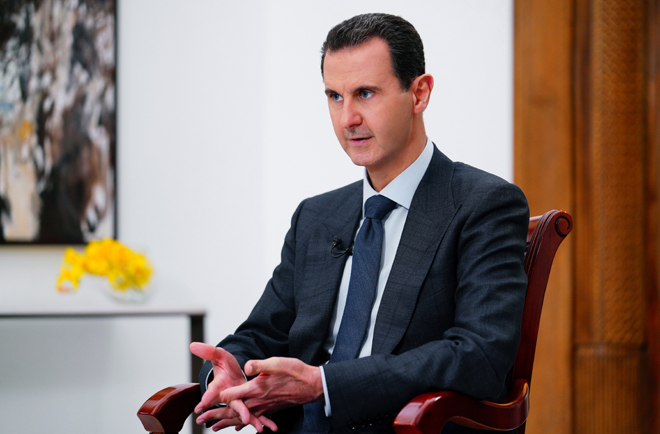
Testo integrale dell'intervista ad Assad censurata dalla RAI

Il testo integrale dell'intervista;

Domanda 1: Signor Presidente, grazie per averci qui. Facci sapere per favore, qual è la situazione in Siria ora, qual è la situazione sul campo, cosa sta succedendo nel paese?

Presidente Assad: se vogliamo parlare della società siriana: la situazione è molto, molto migliore, poiché abbiamo imparato tante lezioni da questa guerra e penso che il futuro della Siria sia promettente; usciremo da questa guerra più forti.

Parlando della situazione sul terreno: l'esercito siriano ha fatto progressi negli ultimi anni e ha liberato molte aree dai terroristi, rimane ancora inattivo dove hai al-Nusra che è supportato dai turchi e hai il nord parte della Siria dove i turchi hanno invaso il nostro territorio il mese scorso.

Quindi, per quanto riguarda la situazione politica, puoi dire che sta diventando molto più complicato, perché hai molti più giocatori coinvolti nel conflitto siriano per farlo trascinare e trasformarlo in una guerra di logoramento.

 Domanda 2: Quando parli di liberazione, sappiamo che esiste una visione militare su questo, ma il punto è: com'è la situazione adesso per le persone che hanno deciso di tornare nella società? Il processo di riconciliazione, ora a che punto? Funziona o no?

Presidente Assad: In realtà, la metodologia che abbiamo adottato quando volevamo creare, diciamo, una buona atmosfera - l'abbiamo chiamata riconciliazione, per le persone che vivono insieme e per quelle persone che vivevano al di fuori del controllo delle aree governative per tornare a l'ordine della legge e delle istituzioni. Era per dare l'amnistia a chiunque, che rinunciasse al suo armamento e obbedisse alla legge. La situazione non è complicata per quanto riguarda questo problema, se hai la possibilità di visitare qualsiasi area, vedrai che la vita sta tornando alla normalità.

Il problema non erano le persone che combattevano tra loro; non era come se la narrativa occidentale avesse tentato di mostrare - come i siriani combattono tra loro, o come la chiamano una "guerra civile", il che è fuorviante. La situazione era che i terroristi prendevano il controllo delle aree e ne attuavano le regole. Quando non hai quei terroristi, le persone torneranno alla loro vita normale e vivranno insieme. Non c'era guerra settaria, non c'era guerra etnica, non c'era guerra politica; erano terroristi sostenuti da potenze esterne, avevano denaro e armamenti e occupavano quelle aree.

Domanda 3: Non hai paura che questo tipo di ideologia abbia avuto luogo e, sai, è stata la base della vita quotidiana delle persone per così tanti anni, in qualche modo può rimanere nella società e prima o poi tornerà?

Presidente Assad: questa è una delle principali sfide che abbiamo dovuto affrontare. Quello che stai chiedendo è molto corretto. Hai due problemi. Quelle aree che erano al di fuori del controllo del governo erano governate da due cose: il caos, perché non esiste una legge, quindi le persone - specialmente le giovani generazioni - non sanno nulla dello stato, della legge e delle istituzioni.

La seconda cosa, che è profondamente radicata nelle menti, è l'ideologia, l'ideologia oscura, l'ideologia wahabita - ISIS o al-Nusra o Ahrar al-Cham, o qualunque tipo di queste ideologie estremiste terroristiche islamiste.

Ora abbiamo iniziato a occuparci di questa realtà, perché quando liberate un'area dovete risolvere questo problema, altrimenti qual è il significato di liberazione? La prima parte della soluzione è religiosa, perché questa ideologia è un'ideologia religiosa e i religiosi religiosi siriani, o diciamo che l'istituzione religiosa in Siria, sta facendo uno sforzo molto forte in questo senso, e ci sono riusciti; sono riusciti ad aiutare quelle persone a capire la vera religione, non la religione che gli è stato insegnato da al-Nusra o dall'ISIS o da altre fazioni.

Domanda 4: Quindi, in sostanza, i chierici e le moschee fanno parte di questo processo di riconciliazione?

Presidente Assad: questa è la parte più importante. La seconda parte è le scuole. Nelle scuole hai insegnanti, hai istruzione e hai il curriculum nazionale, e questo curriculum è molto importante per cambiare le idee di quelle giovani generazioni. Terzo, hai la cultura, il ruolo delle arti, degli intellettuali e così via. In alcune aree, è ancora difficile svolgere quel ruolo, quindi è stato molto più facile per noi iniziare con la religione, secondo con le scuole.

Domanda 5: Signor Presidente, vorrei solo tornare in politica per un istante. Hai menzionato la Turchia, ok? La Russia è stata il tuo miglior alleato in questi anni, non è un segreto, ma ora la Russia sta compromettendo con la Turchia in alcune aree che fanno parte dell'area siriana, quindi come lo valuta?


 Presidente Assad: per comprendere il ruolo russo, dobbiamo comprendere i principi russi. Per la Russia, credono che il diritto internazionale - e l'ordine internazionale basato su quella legge - sia nell'interesse della Russia e nell'interesse di tutti nel mondo. Quindi, per loro, sostenendo la Siria sostengono il diritto internazionale; questo è un punto. In secondo luogo, essere contro i terroristi è nell'interesse del popolo russo e del resto del mondo.

Quindi, stare con la Turchia e fare questo compromesso non significa che sostengano l'invasione turca; piuttosto volevano avere un ruolo per convincere i turchi che bisogna lasciare la Siria. Non sostengono i turchi, non dicono "questa è una buona realtà, la accettiamo e la Siria deve accettarla." No, non lo fanno. Ma a causa del ruolo negativo americano e del ruolo negativo occidentale nei confronti della Turchia e dei curdi, i russi sono intervenuti, al fine di bilanciare quel ruolo, per rendere la situazione ... Non direi meglio, ma meno male se vuoi essere più preciso. Quindi, nel frattempo, quello è il loro ruolo. In futuro, la loro posizione è molto chiara: integrità siriana e sovranità siriana. L'integrità e la sovranità siriane sono in contraddizione con l'invasione turca, che è molto ovvia e chiara.

Domanda 6: Quindi mi stai dicendo che i russi potrebbero scendere a compromessi, ma la Siria non comprometterà la Turchia. Voglio dire, la relazione è ancora piuttosto tesa.

Presidente Assad: No, anche i russi non hanno fatto un compromesso riguardo alla sovranità. No, hanno a che fare con la realtà. Ora, hai una brutta realtà, devi essere coinvolto per fare un po '... Non direi un compromesso perché non è una soluzione finale. Potrebbe essere un compromesso per quanto riguarda la situazione a breve termine, ma a lungo o medio termine, la Turchia dovrebbe andarsene. Non ci sono dubbi.

Domanda 7: E a lungo termine, qualche piano di discussione tra lei e il signor Erdogan?

Presidente Assad: non mi sentirei orgoglioso se un giorno dovessi. Mi sentirei disgustato nel trattare con quei tipi di islamisti opportunisti, non musulmani, islamisti - è un altro termine, è un termine politico. Ma ancora una volta, dico sempre: il mio lavoro non è quello di essere contento di quello che sto facendo o di non essere felice o altro. Non riguarda i miei sentimenti, riguarda gli interessi della Siria, quindi ovunque andranno i nostri interessi, andrò.

Domanda 8: In questo momento, quando l'Europa guarda alla Siria, a parte le considerazioni sul paese, ci sono due problemi principali: uno sono i rifugiati e l'altro sono i jihadisti o combattenti stranieri che tornano in Europa. Come vedi queste preoccupazioni europee?

Presidente Assad: dobbiamo iniziare con una semplice domanda: chi ha creato questo problema? Perché hai rifugiati in Europa? È una domanda semplice: a causa del terrorismo sostenuto dall'Europa - e ovviamente dagli Stati Uniti, dalla Turchia e da altri - ma l'Europa è stata il principale attore nella creazione del caos in Siria. Quindi, ciò che accade viene.

 Domanda 9: Perché dici che era il giocatore principale?

Presidente Assad: poiché hanno sostenuto pubblicamente, l'UE ha sostenuto i terroristi in Siria dal primo giorno, dalla prima settimana o dall'inizio. Hanno incolpato il governo siriano e alcuni regimi come il regime francese hanno inviato armamenti, hanno detto - uno dei loro funzionari - penso che il loro ministro degli Esteri, forse Fabius abbia detto "mandiamo". Hanno inviato armamenti; hanno creato questo caos. Ecco perché molte persone hanno difficoltà a rimanere in Siria; milioni di persone non hanno potuto vivere qui, quindi hanno dovuto uscire dalla Siria.

 Domanda 10: In questo momento, nella regione, ci sono disordini e c'è un certo caos. Uno degli altri alleati della Siria è l'Iran e la situazione sta diventando complicata. Riflette sulla situazione in Siria?

Presidente Assad: Sicuramente, ogni volta che avrai il caos, sarà un male per tutti, avrà effetti collaterali e ripercussioni, specialmente in presenza di interferenze esterne. Se è spontaneo, se parli di dimostrazioni e di persone che chiedono riforme o una migliore situazione economica o altri diritti, è positivo. Ma quando si tratta di atti di vandalismo, distruzione, uccisione e interferenze da parte di poteri esterni, allora no: non è assolutamente nient'altro che negativo, nient'altro che cattivo e un pericolo per tutti in questa regione.

 Domanda 11: sei preoccupato per quello che sta succedendo in Libano, che è davvero il vero vicino di casa?

Presidente Assad: Sì, allo stesso modo. Certo, il Libano influenzerebbe la Siria più di qualsiasi altro paese perché è il nostro vicino diretto. Ma ancora una volta, se è spontaneo e si tratta di riforme e di liberarsi del sistema politico settario, sarebbe positivo per il Libano. Ancora una volta, ciò dipende dalla consapevolezza del popolo libanese al fine di non consentire a nessuno dall'esterno di provare a manipolare il movimento o le manifestazioni spontanee in Libano.


Domanda 12: Torniamo a ciò che sta accadendo in Siria. A giugno, papa Francesco ti ha scritto una lettera in cui ti chiedeva di prestare attenzione e rispettare la popolazione, soprattutto a Idleb dove la situazione è ancora molto tesa, perché lì si combatte e quando si arriva persino al modo in cui i prigionieri vengono trattati nelle carceri . Gli hai risposto e cosa hai risposto?

Presidente Assad: la lettera del Papa riguardava la sua preoccupazione per i civili in Siria e ho avuto l'impressione che forse il quadro in Vaticano non fosse completo. Questo è prevedibile, dal momento che la narrativa principale in Occidente parla di questo "cattivo governo" che uccide la "brava gente", come si vede e si sente negli stessi media: ogni proiettile dell'esercito siriano e ogni bomba uccide solo i civili e solo ospedali! non uccidono i terroristi mentre prendono di mira quei civili! che non è corretto.

Quindi, ho risposto con una lettera che spiegava al Papa la realtà in Siria - poiché siamo i più, o i primi a preoccuparci della vita dei civili, perché non puoi liberare un'area mentre il popolo è contro di te. Non puoi parlare di liberazione mentre i civili sono contro di te o la società. La parte più cruciale nel liberare militarmente qualsiasi area è quella di avere il sostegno del pubblico in quell'area o nella regione in generale. Ciò è stato chiaro negli ultimi nove anni e ciò è contrario ai nostri interessi.

Domanda 13: Ma quel tipo di chiamata, in qualche modo, ti ha fatto riflettere ancora sull'importanza di proteggere i civili e le persone del tuo paese.

Presidente Assad: No, questo è qualcosa a cui pensiamo ogni giorno, non solo come morale, principi e valori, ma come interessi. Come ho appena detto, senza questo supporto - senza il sostegno pubblico, non puoi ottenere nulla ... non puoi avanzare politicamente, militarmente, economicamente e in ogni aspetto. Non potremmo resistere a questa guerra per nove anni senza il sostegno pubblico e non puoi avere supporto pubblico mentre uccidi civili. Questa è un'equazione, questa è un'equazione evidente, nessuno può smentirla. Quindi, è per questo che ho detto, indipendentemente da questa lettera, questa è la nostra preoccupazione.

Ma ancora una volta, il Vaticano è uno stato e pensiamo che il ruolo di qualsiasi stato - se si preoccupano di quei civili, è quello di andare alla ragione principale. La ragione principale è il ruolo occidentale nel sostenere i terroristi, ed è le sanzioni contro il popolo siriano che hanno peggiorato la situazione - e questa è un'altra ragione per i rifugiati che avete in Europa adesso. Non vuoi rifugiati ma allo stesso tempo crei la situazione o l'atmosfera che diranno loro "vai fuori dalla Siria, da qualche altra parte" e ovviamente andranno in Europa. Quindi, questo stato, o qualsiasi altro stato, dovrebbe occuparsi delle ragioni e speriamo che il Vaticano possa svolgere quel ruolo in Europa e nel mondo; per convincere molti stati che dovresti smettere di immischiarti nella questione siriana, smettere di violare il diritto internazionale. Basta, abbiamo solo bisogno che le persone seguano il diritto internazionale. I civili saranno al sicuro, l'ordine tornerà, tutto andrà bene. Nient'altro.

 Domanda 14: Signor Presidente, diverse volte sei stato accusato di usare armi chimiche e questo è stato lo strumento di molte decisioni e un punto chiave, la linea rossa, per molte decisioni. Un anno fa, più di un anno fa, si è verificato l'evento Douma che è stato considerato un'altra linea rossa. Successivamente, ci sono stati bombardamenti, e avrebbe potuto essere anche peggio, ma qualcosa si è fermato. In questi giorni, attraverso WikiLeaks, sta venendo fuori che potrebbe essersi verificato qualcosa di sbagliato nel rapporto. Quindi, nessuno è ancora in grado di dire cosa è successo, ma potrebbe essersi verificato qualcosa di sbagliato nel riportare ciò che è successo.

Presidente Assad: abbiamo sempre - sin dall'inizio di questa narrazione riguardante le armi chimiche - abbiamo detto che non l'abbiamo usato; non possiamo usarlo, è impossibile essere usati nella nostra situazione per molte ragioni, diciamo - ragioni logistiche.

Intervento: dammi uno.

Presidente Assad: Un motivo, molto semplice: quando avanzi, perché dovresti usare armi chimiche ?! Stiamo avanzando, perché dobbiamo usarlo ?! Siamo in un'ottima situazione, quindi perché usarlo, soprattutto nel 2018? Questo è uno dei motivi.


econdo, prove molto concrete che confutano questa narrazione: quando usi armi chimiche - questa è un'arma di distruzione di massa, parli di migliaia di morti o almeno centinaia. Ciò non è mai accaduto, mai - hai solo questi video di attacchi con armi chimiche in scena. Nel recente rapporto che hai citato, c'è una discrepanza tra ciò che abbiamo visto nel video e ciò che hanno visto come tecnici o esperti. La quantità di cloro di cui stanno parlando: prima di tutto, il cloro non è un materiale di distruzione di massa, in secondo luogo, la quantità che hanno trovato è la stessa quantità che puoi avere in casa, esiste in molte famiglie e utilizzata forse per la pulizia e quant'altro. Lo stesso importo esattamente. È quello che ha fatto l'organizzazione OPCW: hanno falsificato e falsificato il rapporto, solo perché gli americani volevano che lo facessero. Quindi, per fortuna, questo rapporto ha dimostrato che tutto ciò che abbiamo detto negli ultimi anni, dal 2013, è corretto. Avevamo ragione, avevano torto. Questa è una prova, questa è una prova concreta riguardo a questo problema. Quindi, ancora una volta, l'OPCW è di parte, viene politicizzato ed è immorale, e quelle organizzazioni che dovrebbero lavorare in parallelo con le Nazioni Unite per creare più stabilità in tutto il mondo - sono state usate come armi americane e occidentali per creare più caos.

Domanda 15: Signor Presidente, dopo nove anni di guerra, lei parla degli errori degli altri. Vorrei che parlassi dei tuoi errori, se presenti. C'è qualcosa che avresti fatto in modo diverso e qual è la lezione appresa che può aiutare il tuo paese?

Presidente Assad: Sicuramente, perché quando parli di fare qualcosa, trovi sempre degli errori; questa è la natura umana. Ma quando parli di pratica politica, hai due cose: hai strategie o grandi decisioni e hai tattiche - o in questo contesto, l'implementazione. Quindi, le nostre decisioni strategiche o le nostre decisioni principali dovevano combattere il terrorismo, fare la riconciliazione e contrastare le ingerenze esterne nei nostri affari. Oggi, dopo nove anni, adottiamo ancora la stessa politica; siamo più aderenti a questa politica. Se avessimo pensato che fosse sbagliato, l'avremmo cambiato; in realtà no, non pensiamo che ci sia qualcosa di sbagliato in questa politica. Abbiamo fatto la nostra missione; abbiamo implementato la costituzione proteggendo le persone.

Ora, se parli di errori nell'implementazione, ovviamente hai così tanti errori. Penso che se vuoi parlare degli errori riguardanti questa guerra, non dovremmo parlare delle decisioni prese durante la guerra perché la guerra - o parte di essa, è il risultato di qualcosa prima.

Due cose che abbiamo affrontato durante questa guerra: la prima era l'estremismo. L'estremismo è iniziato in questa regione alla fine degli anni '60 e ha accelerato negli anni '80, in particolare l'ideologia wahabita. Se vuoi parlare di errori nell'affrontare questo problema: allora sì, dirò che eravamo molto tolleranti nei confronti di qualcosa di molto pericoloso. Questo è un grosso errore che abbiamo commesso nel corso di decenni; Sto parlando di diversi governi, incluso me stesso prima di questa guerra.

Il secondo, quando hai persone pronte a ribellarsi contro l'ordine, a distruggere proprietà pubbliche, a commettere atti di vandalismo e così via, lavorano contro il loro paese, sono pronte per andare a lavorare per potenze straniere - intelligence straniera, loro chiedere interferenze militari esterne contro il loro paese. Quindi, questa è un'altra domanda: come li abbiamo fatti? Se mi chiedi come, ti direi che prima della guerra avevamo più di 50.000 fuorilegge che non erano stati catturati dalla polizia per esempio; per quei fuorilegge, il loro nemico naturale è il governo perché non vogliono andare in prigione.

Domanda 16: E la situazione economica? Perché in parte - non so se fosse una parte grande o piccola - ma in parte è stato anche il malcontento e i problemi della popolazione in alcune aree in cui l'economia non funzionava. È una lezione imparata da qualche parte?

Presidente Assad: potrebbe essere un fattore, ma sicuramente non un fattore principale. Alcune persone parlano dei quattro anni di siccità che hanno spinto la gente a lasciare la propria terra nelle aree rurali per recarsi in città ... potrebbe essere un problema, ma questo non è il problema principale. Hanno parlato della politica liberale ... non avevamo una politica liberale, siamo ancora socialisti, abbiamo ancora un settore pubblico - un settore pubblico molto grande nel governo. Non puoi parlare di politica liberale mentre hai un grande settore pubblico. Abbiamo avuto crescita, buona crescita.


 Ovviamente, nell'attuazione della nostra politica, hai di nuovo degli errori. Come puoi creare pari opportunità tra le persone? Tra zone rurali e tra le città? Quando si apre l'economia, le città ne trarranno maggiori benefici, ciò creerà più immigrazione dalle aree rurali alle città ... questi sono fattori che potrebbero svolgere un ruolo, ma non è questo il problema. Nelle zone rurali in cui si ha più povertà, il denaro del Qatar ha svolto un ruolo più effettivo rispetto alle città, è naturale. Li paghi in mezz'ora quello che ottengono in una settimana; va molto bene per loro.

Domanda 17: Siamo quasi arrivati, ma ci sono altre due domande che voglio farti. Uno riguarda la ricostruzione e la ricostruzione sarà molto costosa. Come puoi immaginare di permetterti questa ricostruzione, chi potrebbe essere il tuo alleato nella ricostruzione?

Presidente Assad: non abbiamo grossi problemi. Parlando che la Siria non ha soldi ... no, in realtà i siriani hanno molti soldi; il popolo siriano nel mondo ha molti soldi e vuole venire a costruire il suo paese. Perché quando parli di costruire il paese, non si tratta di dare soldi alle persone, si tratta di ottenere benefici - è un business. Quindi, molte persone, non solo siriane, vogliono fare affari in Siria. Quindi, parlando di dove puoi avere fondi per questa ricostruzione, lo abbiamo già fatto, ma il problema è che queste sanzioni impediscono a quegli uomini d'affari o aziende di venire e lavorare in Siria. Nonostante ciò, abbiamo iniziato e, nonostante ciò, alcune società straniere hanno iniziato a trovare modi per eludere queste sanzioni e abbiamo iniziato a pianificare. Sarà lento, senza le sanzioni che non avremmo problemi con i finanziamenti.

Domanda 18: Conclusione su una nota molto personale, signor Presidente; ti senti un sopravvissuto?

Presidente Assad: se vuoi parlare di una guerra nazionale come questa, in cui quasi tutte le città sono state danneggiate dal terrorismo o dai bombardamenti esterni e altre cose, allora puoi parlare di tutti i siriani come sopravvissuti. Penso che questa sia la natura umana: essere un sopravvissuto.

Intervento: e tu stesso?

Presidente Assad: faccio parte di quei siriani. Non posso essere disconnesso da loro; Ho la stessa sensazione. Ancora una volta, non si tratta di essere una persona forte che è un sopravvissuto. Se non hai questa atmosfera, questa società o questa incubatrice per sopravvivere, non puoi sopravvivere. È collettivo; non è una sola persona, non è uno spettacolo individuale.

Giornalista: Grazie mille, signor Presidente.

Presidente Assad: grazie.


The full text of the interview;
Question 1: Mr. President, thanks for having us here.  Let us know please, what’s the situation in Syria now, what’s the situation on the ground, what is happening in the country?
President Assad:  If we want to talk about Syrian society: the situation is much, much better, as we learned so many lessons from this war and I think the future of Syria is promising; we are going to come out of this war stronger.
Talking about the situation on the ground: The Syrian Army has been advancing for the last few years and has liberated many areas from the terrorists, there still remains Idleb where you have al-Nusra that’s being supported by the Turks, and you have the northern part of Syria where the Turks have invaded our territory last month.
So, regarding the political situation, you can say it’s becoming much more complicated, because you have many more players that are involved in the Syrian conflict in order to make it drag on and to turn it into a war of attrition.
 Question 2:  When you speak about liberating, we know that there is a military vision on that, but the point is: how is the situation now for the people that decided to be back in society?  The process of reconciliation, now at what point?  Is it working or not?
President Assad: Actually, the methodology that we adopted when we wanted to create let’s say, a good atmosphere – we called it reconciliation, for the people to live together, and for those people who lived outside the control of government areas to go back to the order of law and institutions.  It was to give amnesty to anyone, who gives up his armament and obey the law.  The situation is not complicated regarding this issue, if you have the chance to visit any area, you’ll see that life is getting back to normal.
The problem wasn’t people fighting with each other; it wasn’t like the Western narrative may have tried to show – as Syrians fighting with each other, or as they call it a “civil war,” which is misleading.  The situation was terrorists taking control of areas, and implementing their rules.  When you don’t have those terrorists, people will go back to their normal life and live with each other.  There was no sectarian war, there was no ethnical war, there was no political war; it was terrorists supported by outside powers, they have money and armaments, and they occupy those areas.
Question 3: Aren’t you afraid that this kind of ideology that took place and, you know, was the basis of everyday life for people for so many years, in some ways can stay in the society and sooner or later will be back?
President Assad: This is one of the main challenges that we’ve been facing.  What you’re asking about is very correct.  You have two problems.  Those areas that were out of the control of government were ruled by two things: chaos, because there is no law, so people – especially the younger generation – know nothing about the state and law and institutions.
The second thing, which is deeply rooted in the minds, is the ideology, the dark ideology, the Wahabi ideology – ISIS or al-Nusra or Ahrar al-Cham, or whatever kind of these Islamist terrorist extremist ideologies.
Now we have started dealing with this reality, because when you liberate an area you have to solve this problem otherwise what’s the meaning of liberating?  The first part of the solution is religious, because this ideology is a religious ideology, and the Syrian religious clerics, or let’s say the religious institution in Syria, is making a very strong effort in this regard, and they have succeeded; they succeeded at helping those people understanding the real religion, not the religion that they’ve been taught by al-Nusra or ISIS or other factions.
Question 4: So basically, clerics and mosques are part of this reconciliation process?
President Assad:  This is the most important part.  The second part is the schools.  In schools, you have teachers, you have education, and you have the national curriculum, and this curriculum is very important to change the minds of those young generations.  Third, you have the culture, you have the role of arts, intellectuals, and so on.  In some areas, it’s still difficult to play that role, so it was much easier for us to start with the religion, second with the schools.
Question 5: Mr. President, let me just go back to politics for an instant. You mentioned Turkey, okay? Russia has been your best ally these years, it’s not a secret, but now Russia is compromising with Turkey on some areas that are part of Syrian area, so how do you assess this?
President Assad: To understand the Russian role, we have to understand the Russian principles.  For Russia, they believe that international law – and international order based on that law – is in the interest of Russia and in the interest of everybody in the world.  So, for them, by supporting Syria they are supporting international law; this is one point.  Secondly, being against the terrorists is in the interest of the Russian people and the rest of the world.
So, being with Turkey and making this compromise doesn’t mean they support the Turkish invasion; rather they wanted to play a role in order to convince the Turks that you have to leave Syria.  They are not supporting the Turks, they don’t say “this is a good reality, we accept it and Syria must accept it.”  No, they don’t.  But because of the American negative role and the Western negative role regarding Turkey and the Kurds, the Russians stepped in, in order to balance that role, to make the situation… I wouldn’t say better, but less bad if you want to be more precise.  So, in the meantime, that’s their role.  In the future, their position is very clear: Syrian integrity and Syrian sovereignty.  Syrian integrity and sovereignty are in contradiction with the Turkish invasion, that is very obvious and clear.
Question 6: So, you’re telling me that the Russians could compromise, but Syria is not going to compromise with Turkey. I mean, the relation is still quite tense.
President Assad:  No, even the Russians didn’t make a compromise regarding the sovereignty.  No, they deal with reality.  Now, you have a bad reality, you have to be involved to make some… I wouldn’t say compromise because it’s not a final solution.  It could be a compromise regarding the short-term situation, but in the long-term or the mid-term, Turkey should leave. There is no question about it.
Question 7: And in the long-term, any plan of discussions between you and Mr. Erdogan?
President Assad:  I wouldn’t feel proud if I have to someday.  I would feel disgusted to deal with those kinds of opportunistic Islamists, not Muslims, Islamists – it’s another term, it’s a political term.  But again, I always say: my job is not to be happy with what I’m doing or not happy or whatever.  It’s not about my feelings, it’s about the interests of Syria, so wherever our interests go, I will go.
Question 8: In this moment, when Europe looks at Syria, apart from the considerations about the country, there are two major issues: one is refugees, and the other one is the Jihadists or foreign fighters coming back to Europe. How do you see these European worries?
President Assad:  We have to start with a simple question: who created this problem?  Why do you have refugees in Europe?  It’s a simple question: because of terrorism that’s being supported by Europe – and of course the United States and Turkey and others – but Europe was the main player in creating chaos in Syria.  So, what goes around comes around.
 Question 9: Why do you say it was the main player?
President Assad:  Because they publicly supported, the EU supported the terrorists in Syria from day one, week one or from the very beginning.  They blamed the Syrian government, and some regimes like the French regime sent armaments, they said – one of their officials – I think their Minister of Foreign Affairs, maybe Fabius said “we send.”  They sent armaments; they created this chaos.  That’s why a lot of people find it difficult to stay in Syria; millions of people couldn’t live here so they had to get out of Syria.
 Question 10: In this moment, in the region, there are turmoil, and there is a certain chaos.  One of the other allies of Syria is Iran, and the situation there is getting complicated.  Does it have any reflection on the situation in Syria?
President Assad:  Definitely, whenever you have chaos, it’s going to be bad for everyone, it’s going to have side-effects and repercussions, especially when there is external interference.  If it’s spontaneous, if you talk about demonstrations and people asking for reform or for a better situation economically or any other rights, that’s positive.  But when it’s for vandalism and destroying and killing and interfering from outside powers, then no – it’s definitely nothing but negative, nothing but bad, and a danger on everyone in this region.
 Question 11: Are you worried about what’s happening in Lebanon, which is really the real neighbor?
President Assad:  Yes, in the same way.  Of course, Lebanon would affect Syria more than any other country because it is our direct neighbor.  But again, if it’s spontaneous and it’s about reform and getting rid of the sectarian political system, that would be good for Lebanon.  Again, that depends on the awareness of the Lebanese people in order not to allow anyone from the outside to try to manipulate the spontaneous movement or demonstrations in Lebanon.
Question 12:  Let’s go back to what is happening in Syria.  In June, Pope Francis wrote you a letter asking you to pay attention and to respect the population, especially in Idleb where the situation is still very tense, because there is fighting there, and when it comes even to the way prisoners are treated in jails.  Did you answer him, and what did you answer?
President Assad: The letter of the Pope was about his worry for civilians in Syria and I had the impression that maybe the picture in the Vatican is not complete.  That’s to be expected, since the mainstream narrative in the West is about this “bad government” killing the “good people;” as you see and hear in the same media – every bullet of the Syrian Army and every bomb only kills civilians and only hospitals! they don’t kill terrorists as they target those civilians! which is not correct.
So, I responded with a letter explaining to the Pope the reality in Syria – as we are the most, or the first to be concerned about civilian lives, because you cannot liberate an area while the people are against you.  You cannot talk about liberation while the civilians are against you or the society.  The most crucial part in liberating any area militarily is to have the support of the public in that area or in the region in general.  That has been clear for the last nine years and that’s against our interests.
Question 13: But that kind of call, in some ways, made you also think again about the importance of protecting civilians and people of your country.
President Assad:  No, this is something we think about every day, not only as morals, principles and values but as interests.  As I just mentioned, without this support – without public support, you cannot achieve anything… you cannot advance politically, militarily, economically and in every aspect.  We couldn’t withstand this war for nine years without the public support and you cannot have public support while you’re killing civilians.  This is an equation, this is a self-evident equation, nobody can refute it.  So, that’s why I said, regardless of this letter, this is our concern.
But again, the Vatican is a state, and we think that the role of any state – if they worry about those civilians, is to go to the main reason.  The main reason is the Western role in supporting the terrorists, and it is the sanctions on the Syrian people that have made the situation much worse – and this is another reason for the refugees that you have in Europe now.  You don’t want refugees but at the same time you create the situation or the atmosphere that will tell them “go outside Syria, somewhere else,” and of course they will go to Europe.  So, this state, or any state, should deal with the reasons and we hope the Vatican can play that role within Europe and around the world; to convince many states that you should stop meddling in the Syrian issue, stop breaching international law.  That’s enough, we only need people to follow international law.  The civilians will be safe, the order will be back, everything will be fine.  Nothing else.
 Question 14: Mr. President, you’ve been accused several times of using chemical weapons, and this has been the instrument of many decisions and a key point, the red line, for many decisions. One year ago, more than one year ago, there has been the Douma event that has been considered another red line.  After that, there has been bombings, and it could it have been even worse, but something stopped.  These days, through WikiLeaks, it’s coming out that something wrong in the report could have taken place.  So, nobody yet is be able to say what has happened, but something wrong in reporting what has happened could have taken place.
President Assad:  We have always – since the beginning of this narrative regarding the chemical weapons – we have said that we didn’t use it; we cannot use it, it’s impossible to be used in our situation for many reasons, let’s say – logistical reasons.
Intervention: Give me one.
President Assad: One reason, a very simple one: when you’re advancing, why would you use chemical weapons?!  We are advancing, why do we need to use it?!  We are in a very good situation so why use it, especially in 2018?  This is one reason.
Second, very concrete evidence that refutes this narrative: when you use chemical weapons – this is a weapon of mass destruction, you talk about thousands of dead or at least hundreds.  That never happened, never – you only have these videos of staged chemical weapons attacks.  In the recent report that you’ve mentioned, there’s a mismatch between what we saw in the video and what they saw as technicians or as experts.  The amount of chlorine that they’ve been talking about: first of all, chlorine is not a mass destruction material, second, the amount that they found is the same amount that you can have in your house, it exists in many households and used maybe for cleaning and whatever.  The same amount exactly.  That’s what the OPCW organisation did – they faked and falsified the report, just because the Americans wanted them to do so.  So, fortunately, this report proved that everything we said during the last few years, since 2013, is correct.  We were right, they were wrong. This is proof, this is concrete proof regarding this issue.  So, again, the OPCW is biased, is being politicized and is being immoral, and those organisations that should work in parallel with the United Nations to create more stability around the world – they’ve been used as American arms and Western arms to create more chaos.
Question 15: Mr. President, after nine years of war, you are speaking about the mistakes of the others.  I would like you to speak about your own mistakes, if any.  Is there something you would have done in a different way, and which is the lesson learned that can help your country?
President Assad:  Definitely, for when you talk about doing anything, you always find mistakes; this is human nature. But when you talk about political practice, you have two things: you have strategies or big decisions, and you have tactics – or in this context, the implementation. So, our strategic decisions or main decisions were to stand against terrorism, to make reconciliation and to stand against the external meddling in our affairs.  Today, after nine years, we still adopt the same policy; we are more adherent to this policy.  If we thought it was wrong, we would have changed it; actually no, we don’t think there is anything wrong in this policy.  We did our mission; we implemented the constitution by protecting the people.
Now, if you talk about mistakes in implementation, of course you have so many mistakes.  I think if you want to talk about the mistakes regarding this war, we shouldn’t talk about the decisions taken during the war because the war – or part of it, is a result of something before.
Two things we faced during this war: the first one was extremism.  The extremism started in this region in the late 60s and accelerated in the 80s, especially the Wahabi ideology.  If you want to talk about mistakes in dealing with this issue: then yes, I will say we were very tolerant of something very dangerous.  This is a big mistake we committed over decades; I’m talking about different governments, including myself before this war.
The second one, when you have people who are ready to revolt against the order, to destroy public properties, to commit vandalism and so on, they work against their country, they are ready to go and work for foreign powers – foreign intelligence, they ask for external military interference against their country.  So, this is another question: how did we have those?  If you ask me how, I would tell you that before the war we had more than 50,000 outlaws that weren’t captured by the police for example; for those outlaws, their natural enemy is the government because they don’t want to go to prison.
Question 16: And how about also the economic situation? Because part of it – I don’t know if it was a big or small part of it – but part of it has also been the discontent and the problems of population in certain areas in which economy was not working.  Is it a lesson learned somewhere?
President Assad:  It could be a factor, but definitely not a main factor.  Some people talk about the four years of drought that pushed the people to leave their land in the rural areas to go to the city… it could be a problem, but this is not the main problem.  They talked about the liberal policy… we didn’t have a liberal policy, we’re still socialist, we still have a public sector – a very big public sector in government.  You cannot talk about liberal policy while you have a big public sector.  We had growth, good growth.
Of course, in the implementation of our policy, again, you have mistakes.  How can you create equal opportunities between people?  Between rural areas and between the cities?  When you open up the economy, the cities will benefit more, that will create more immigration from rural areas to the cities… these are factors, that could play some role, but this is not the issue.  In the rural areas where you have more poverty, the money of the Qataris played a more actual role than in the cities, that’s natural.  You pay them in half an hour what they get in one week; that’s very good for them.
Question 17: We are almost there, but there are two more questions that I want to ask you.  One is about reconstruction, and reconstruction is going to be very costly.  How can you imagine to afford this reconstruction, who could be your allies in reconstruction?
President Assad:  We don’t have a big problem with that.  Talking that Syria has no money… no, actually Syrians have a lot of money; the Syrian people around the world have a lot of money, and they want to come and build their country.  Because when you talk about building the country, it is not giving money to the people, it’s about getting benefit – it’s a business.  So, many people, not only Syrians, want to do business in Syria.  So, talking about where you can have funds for this reconstruction, we already have, but the problem is that these sanctions prevent those businessmen or companies from coming and working in Syria.  In spite of that, we started and in spite of that, some foreign companies have started finding ways to evade these sanctions and we have started planning.  It’s going to be slow, without the sanctions we wouldn’t have a problem with funding.
Question 18:  Ending on a very personal note, Mr. President; do you feel like a survivor?
President Assad:  If you want to talk about a national war like this, where nearly every city has been harmed by terrorism or external bombardment and other things, then you can talk about all the Syrians as survivors.  I think this is human nature: to be a survivor.
Intervention:  And you yourself?
President Assad:  I’m a part of those Syrians.  I cannot be disconnected from them; I have the same feeling.  Again, it’s not about being a strong person who is a survivor.  If you don’t have this atmosphere, this society, or this incubator to survive, you cannot survive.  It’s collective; it’s not a single person, it’s not a one-man show.
Journalist:  Thank you very much, Mr. President.
President Assad:  Thank you.

Italia: il paese più antidemocratico della UE

  Italia: il paese più antidemocratico della UE Non è uno slogan da talk-show. È la conclusione che emerge se si misura la democrazia dove ...